POLY MGM MUSEUM
L2, MGM MACAU
Opening Hours
* Last admission is 30 minutes before closing.
11:00 - 19:00
Monday to Friday
10:00 - 19:00
Saturday and Sunday
10:00 - 20:00
Public Holidays
Free admission
Exhibition Highlights
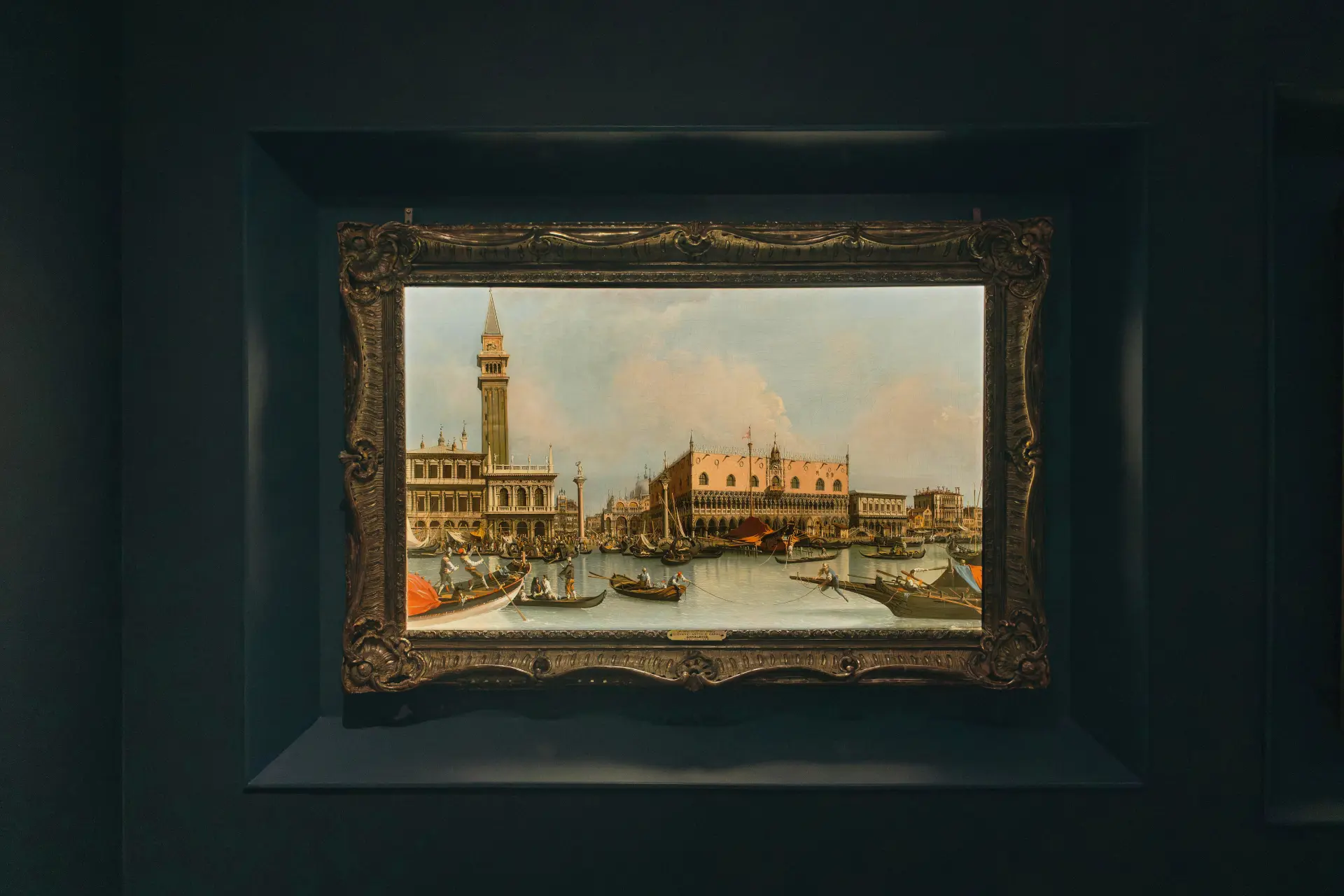
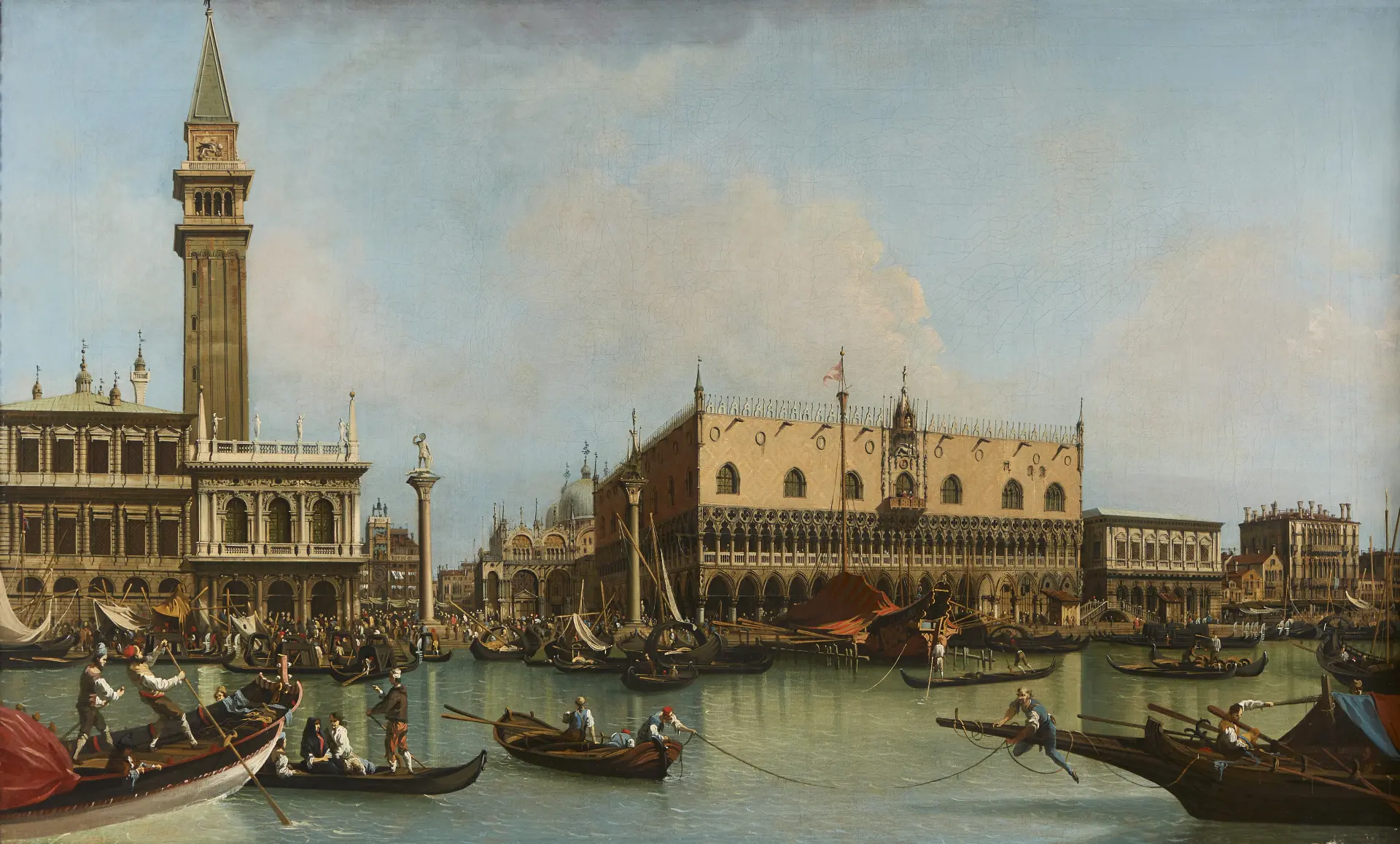
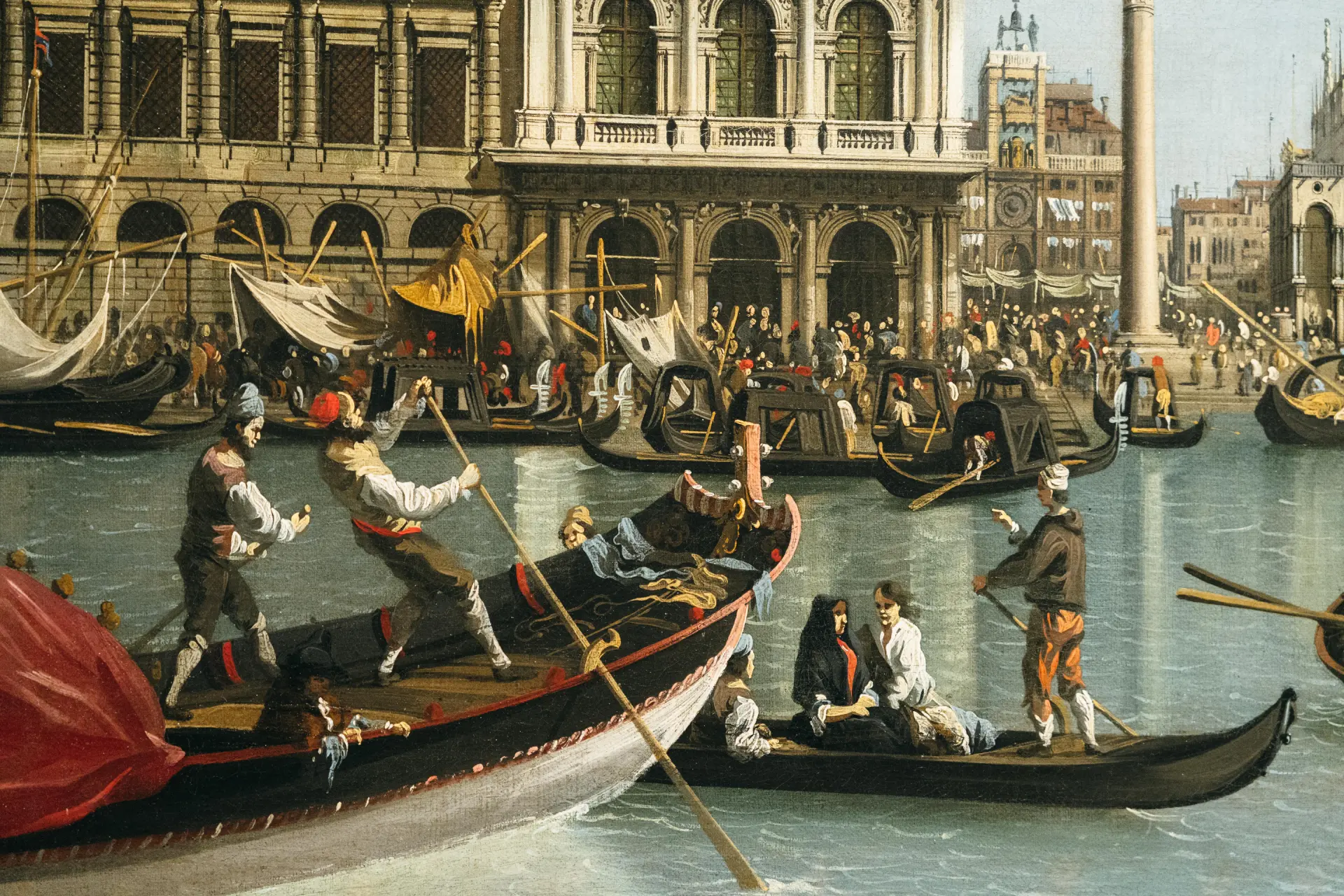
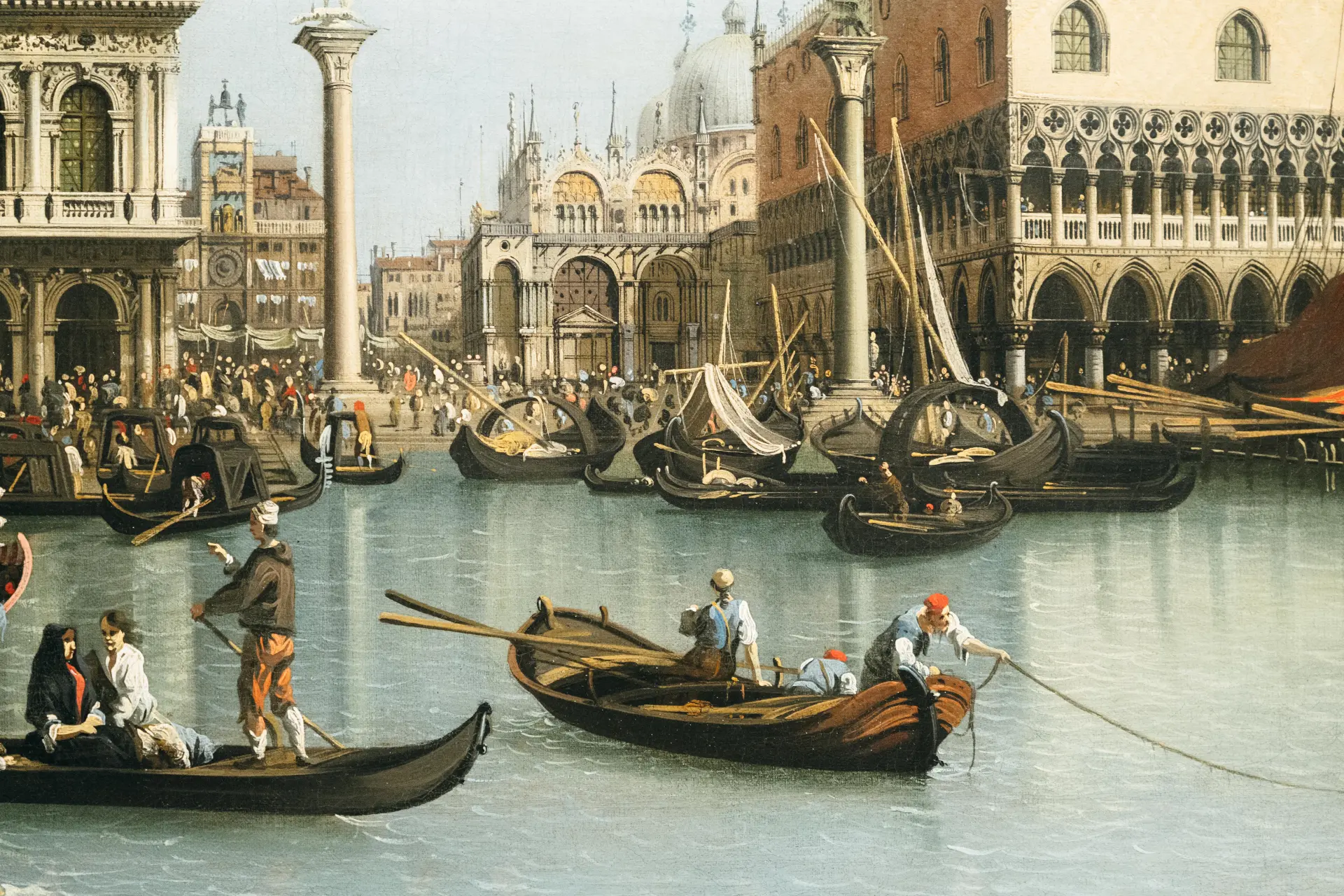
Canaletto, The Docks Seen from San Marco Basin
1733–1734
Collection of Fondazione Paolo e Carolina Zani, Casa Museo, Cellatica (Brescia, Italy)
This painting captures the ceremonial heart of 18th-century Venice. The scene unfolds along the Molo, the waterfront where ambassadors arrived and where the power of the Venetian Republic was staged before the world. At the center rise the Doge’s Palace, the Basilica of San Marco, and the Campanile, forming one of the most iconic urban ensembles in Europe. The Piazzetta, marked by its two columns, functions as a symbolic threshold between the city and the sea—between Venice and distant lands.
Canaletto, the greatest master of the veduta, combined precise observation with artistic control. Using preparatory drawings and optical tools such as the camera obscura, he achieved remarkable clarity, while subtly adjusting perspective and light to create a harmonious and idealized vision. The result is a city that appears both real and perfected—an image of Venice at the height of its global presence.
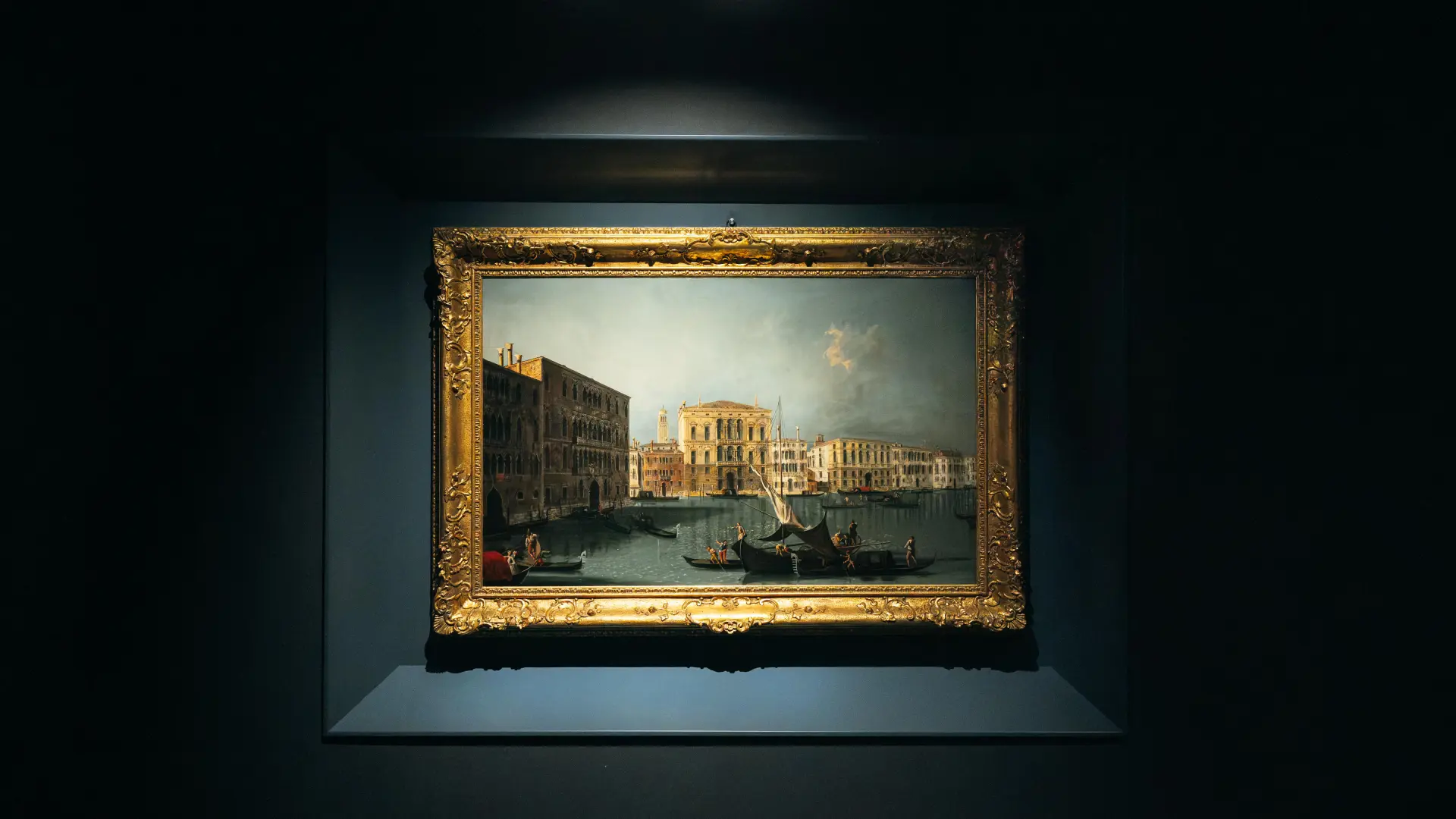
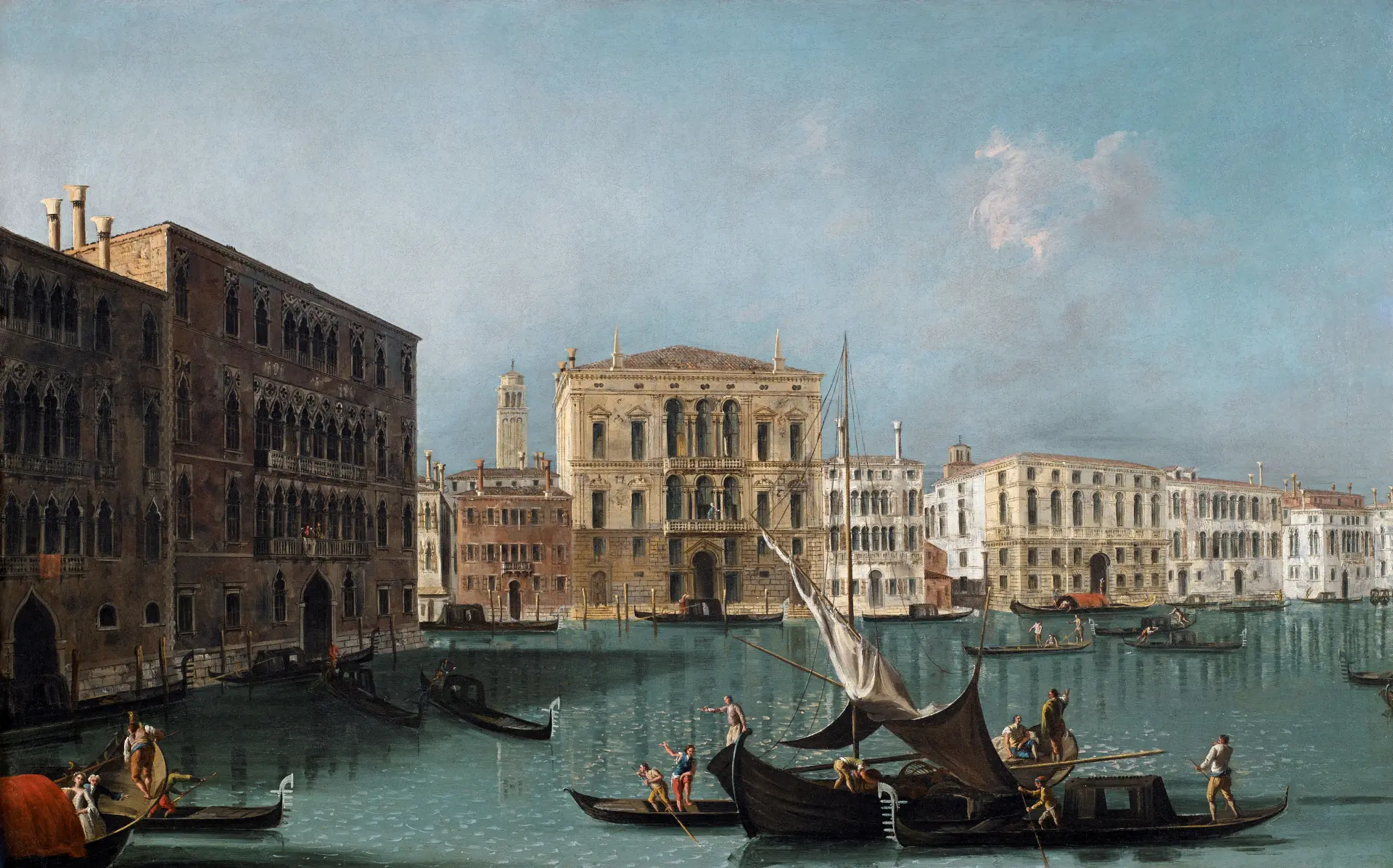
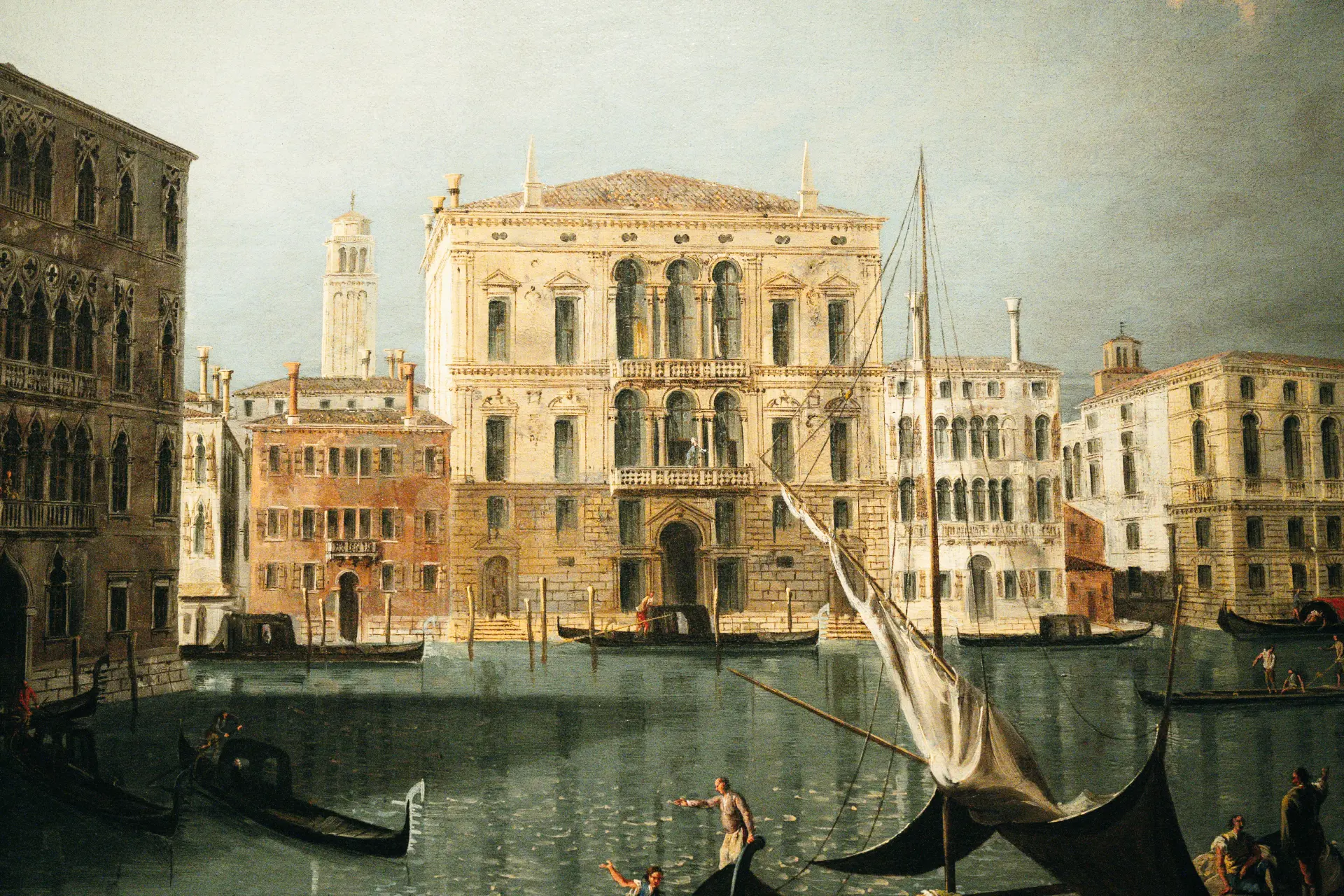
Michele Marieschi, Ca'Foscari and Palazzo Balbi on the Grand Canal
1738–1740
Collection of Fondazione Paolo e Carolina Zani, Brescia, Italy
This painting presents a lively view of the Grand Canal, the main artery of Venetian life. The scene focuses on a stretch known as the Volta, where a sequence of noble palaces unfolds: Ca' Foscari, Palazzo Balbi, and others that reflect the wealth and prestige of the Republic.
While inspired by a similar composition by Canaletto, Marieschi adopts a closer and more immersive viewpoint. The emphasis shifts toward the rhythm of daily life—boats moving across the water, light shimmering on surfaces, and architecture experienced at a human scale.
Painted in the artist's mature period, the work is distinguished by its luminous atmosphere, fluid brushwork, and fresh, pearly colors. Unlike many of his paintings, it is executed entirely by Marieschi himself, including the animated figures that enliven the scene.
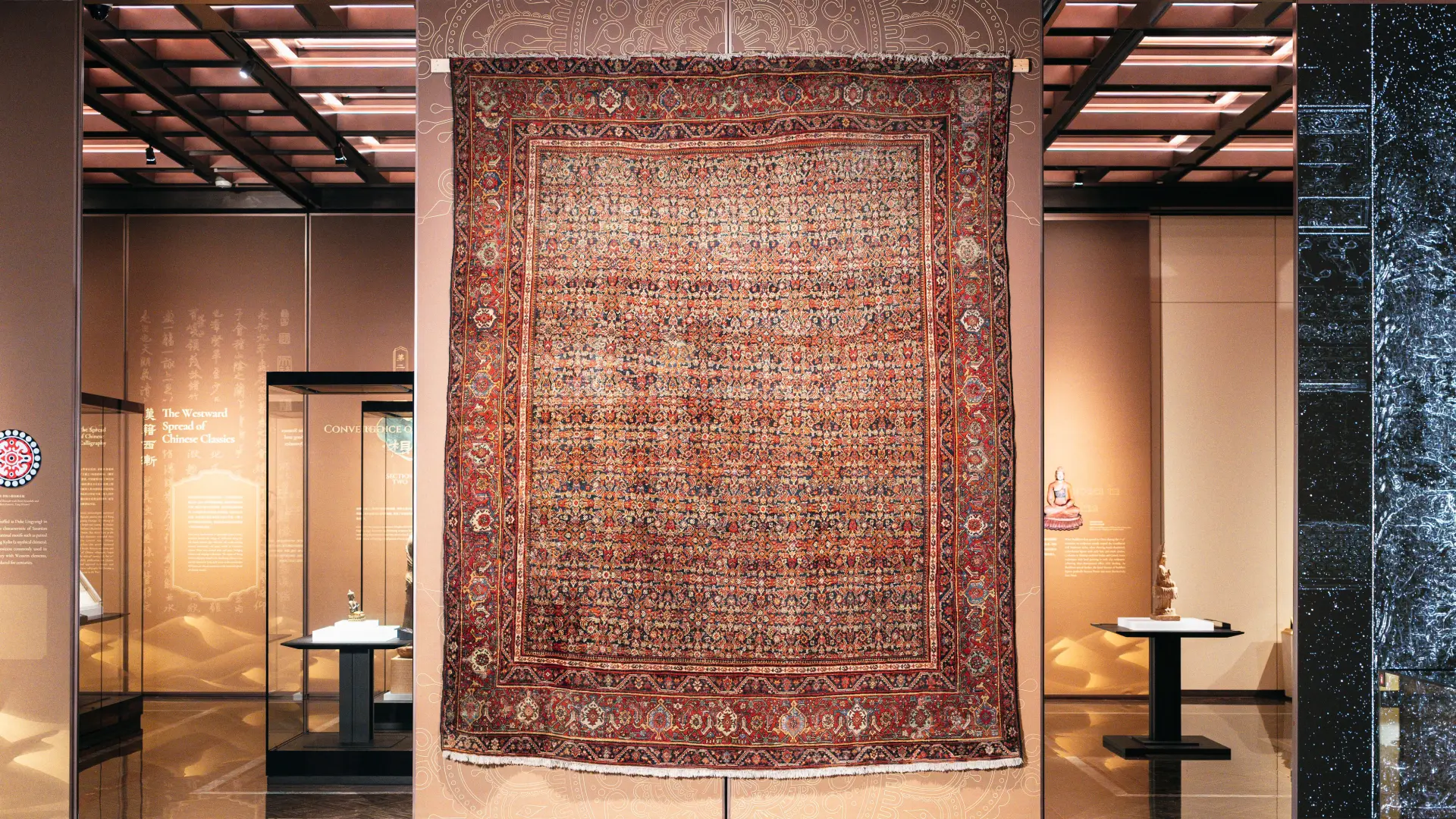
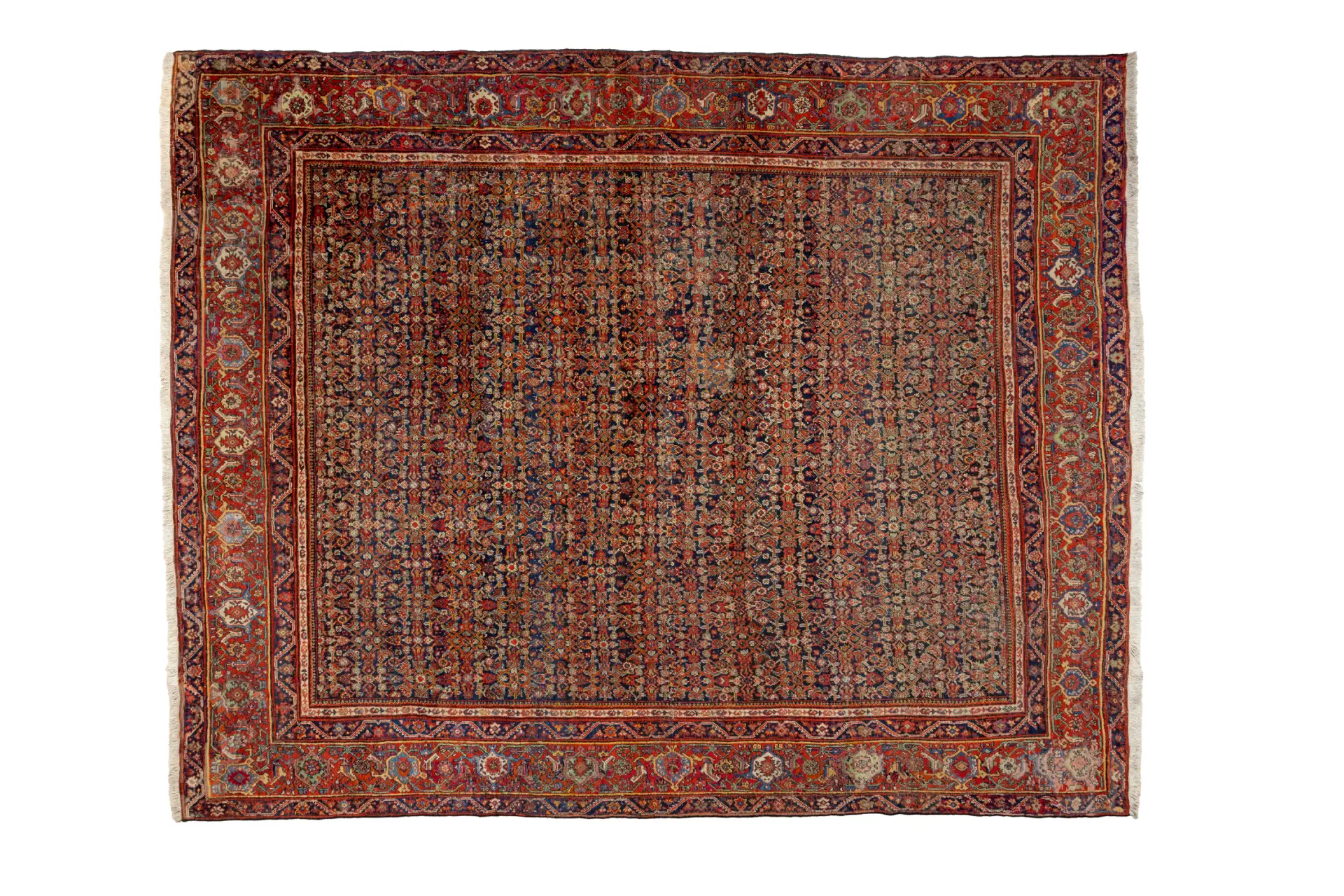
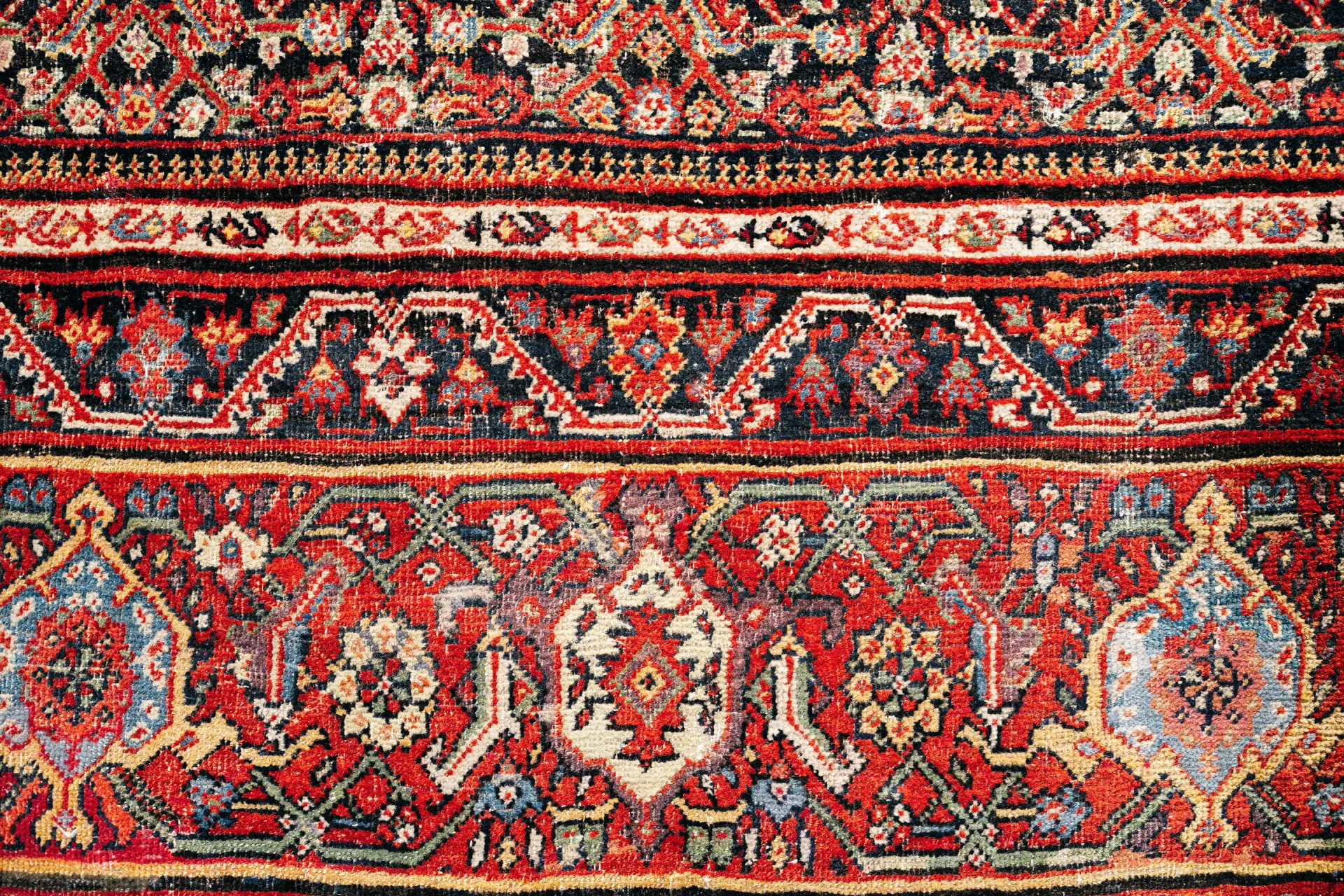
Large Farahan carpet with Herati pattern
Mid-19th century - Early 20th century
Collection of Museu Medeiros e Almeida, Lisbon, Portugal
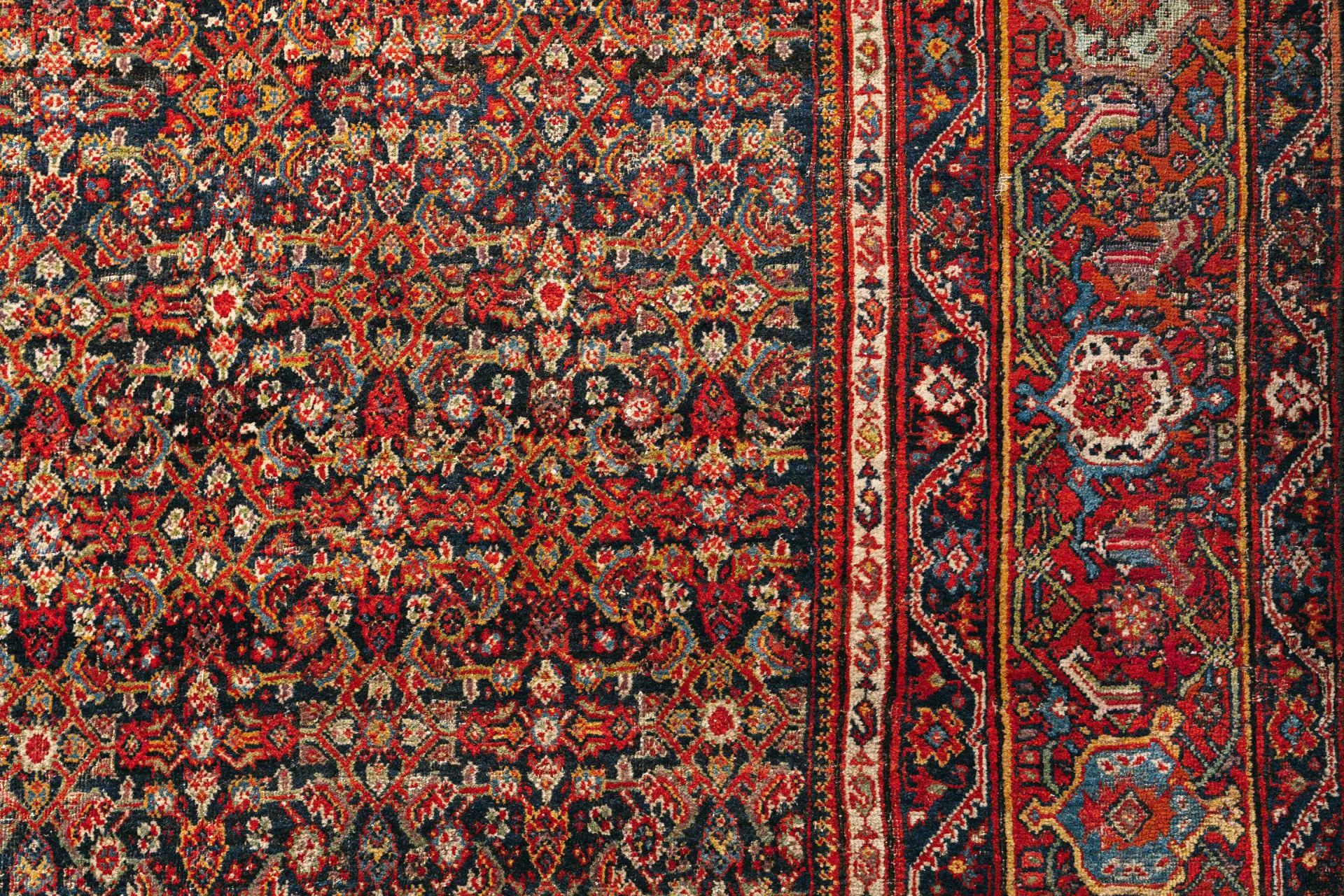
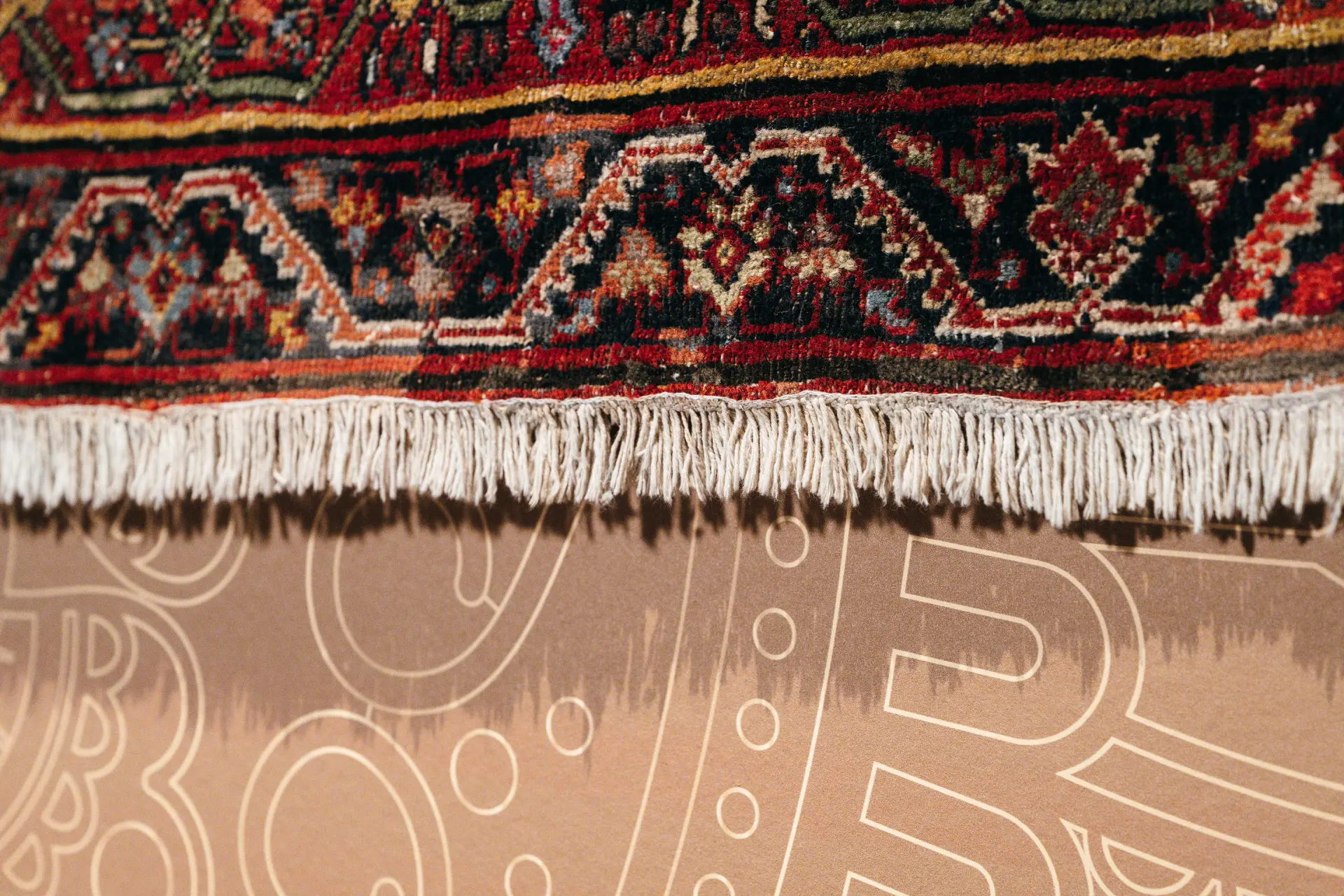
This Ferahan carpet, produced in the Arak region of central Iran, likely dates from the mid-19th to the early 20th century, when the village of Ferahan was a centre of carpet manufacture. Made primarily for export to Europe, it exemplifies the refined aesthetic, durability, and high level of craftsmanship associated with these carpets. Its technical features include a high-density asymmetrical (Persian) knot, a cotton foundation, and finely spun, high-quality wool forming a tight, low pile, contributing to the clarity and precision of its design.
The carpet features a typical all over Herati field design on a dark blue ground, composed of individual red floral elements in a repeating pattern. Dating to the late 16th–early 17th centuries, this motif is characteristic of Safavid Persian court carpets. The design is framed by an unusually broad red main border, flanked by two guard borders that enhance its visual balance.
Dragon-Patterned Throne Carpet
Around Ming or Qing Dynasty
Collection of MGM
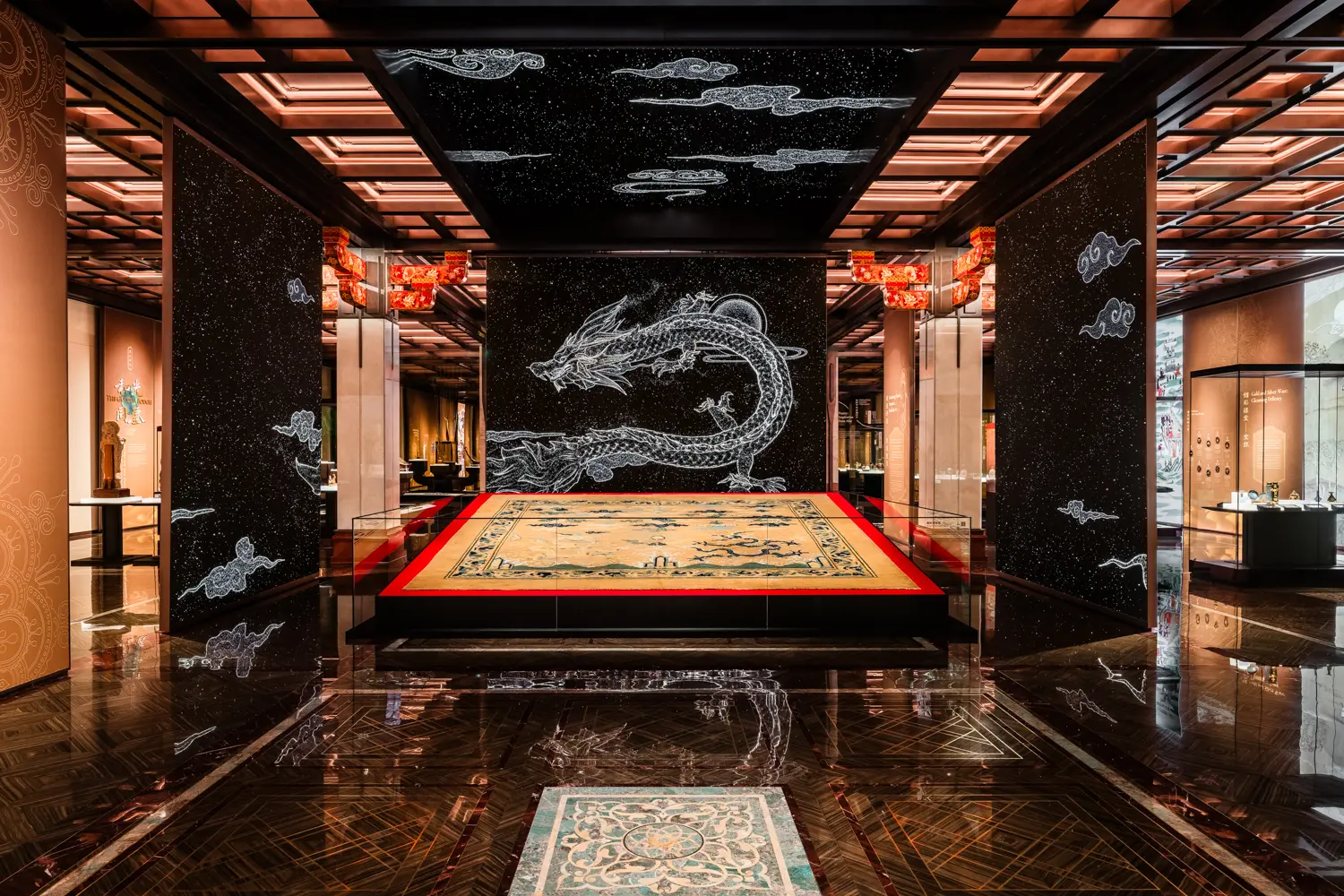
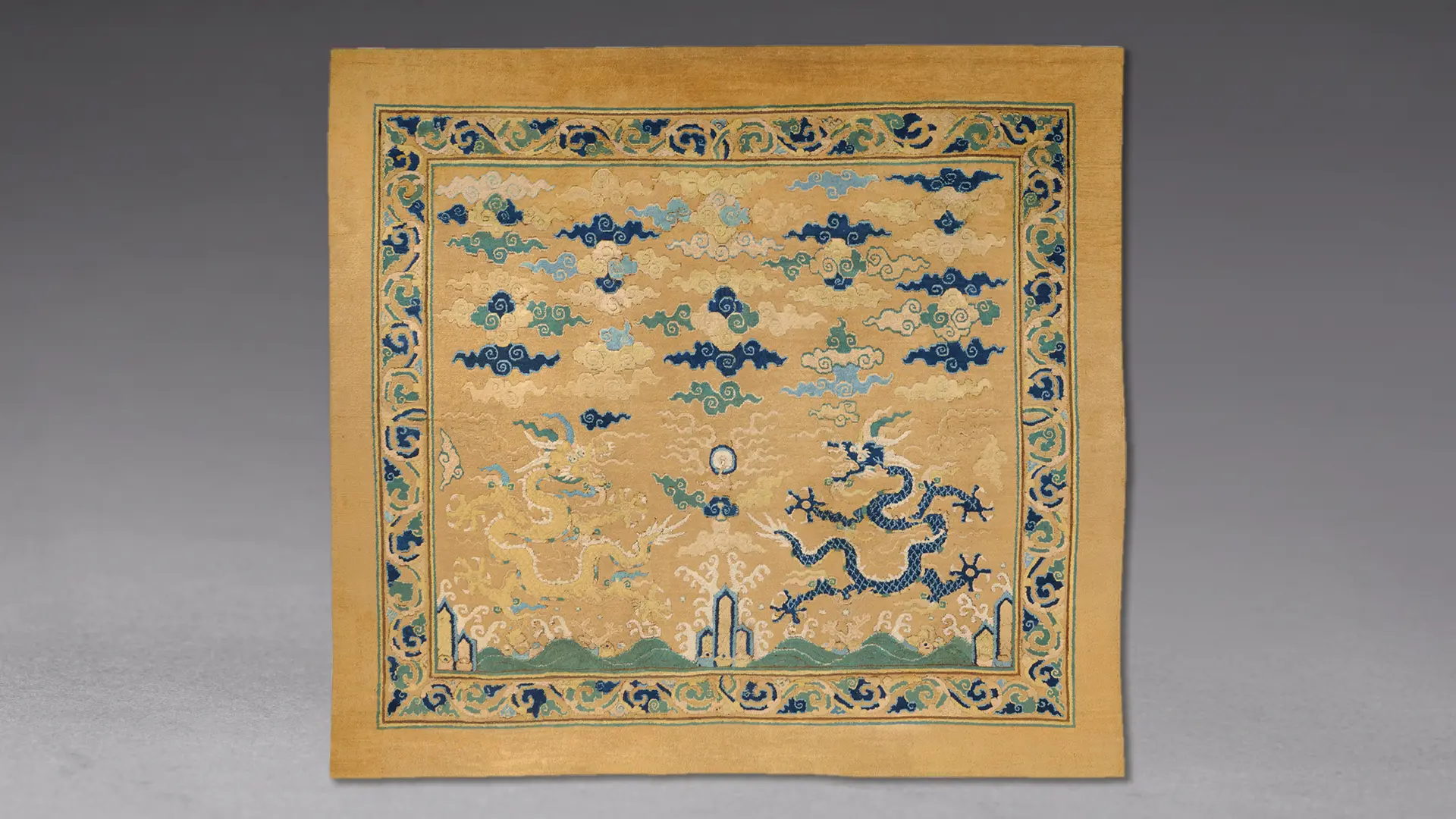
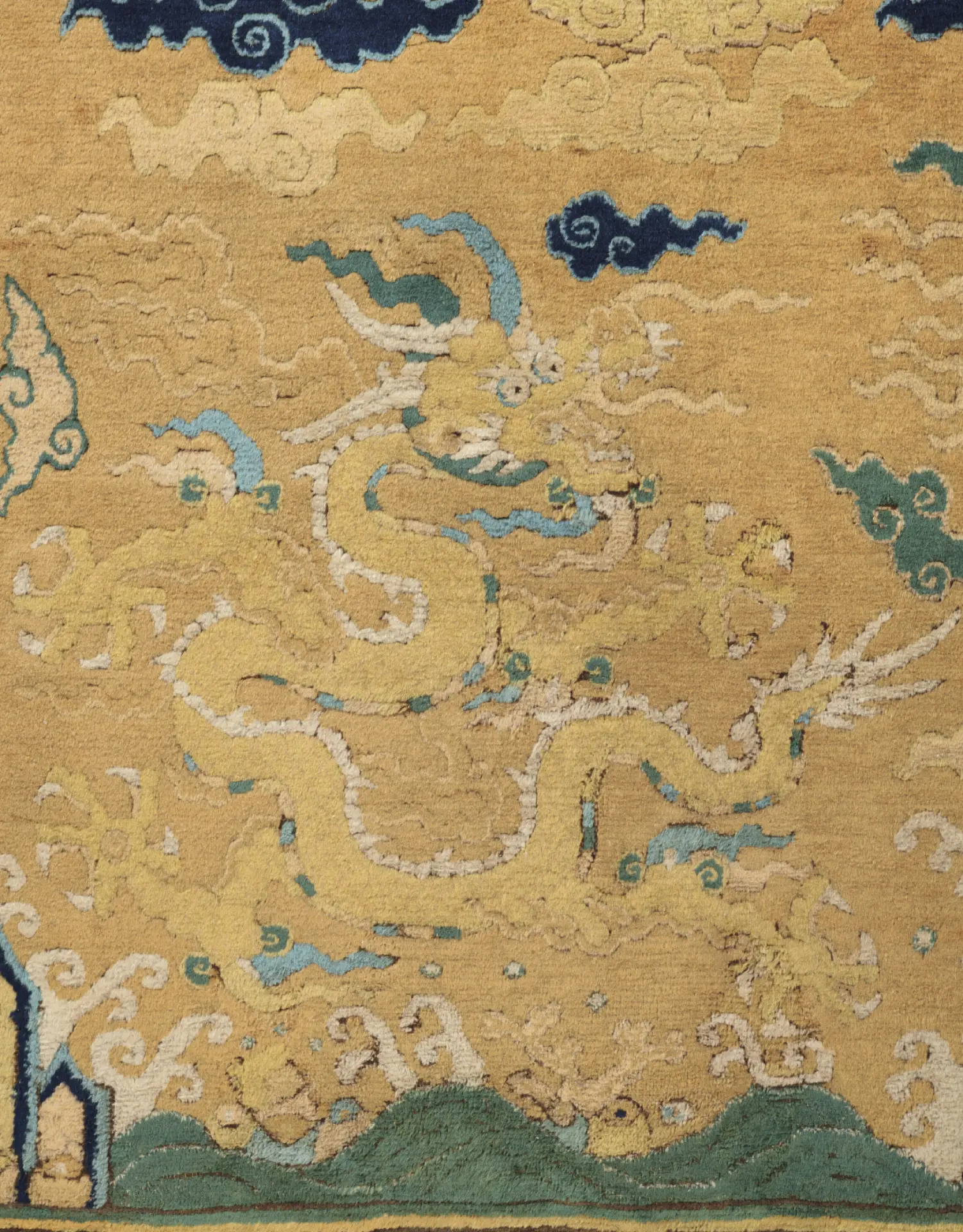
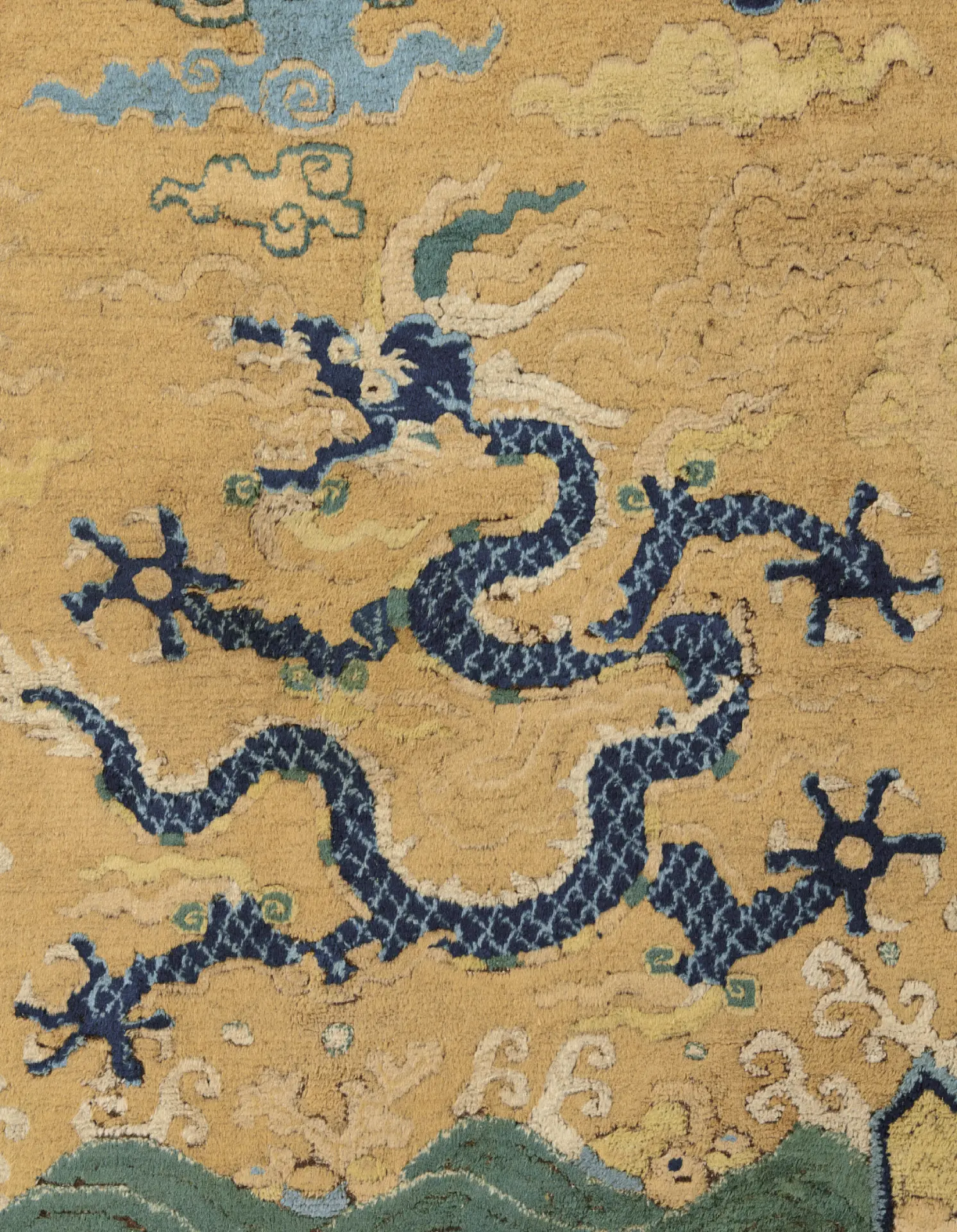
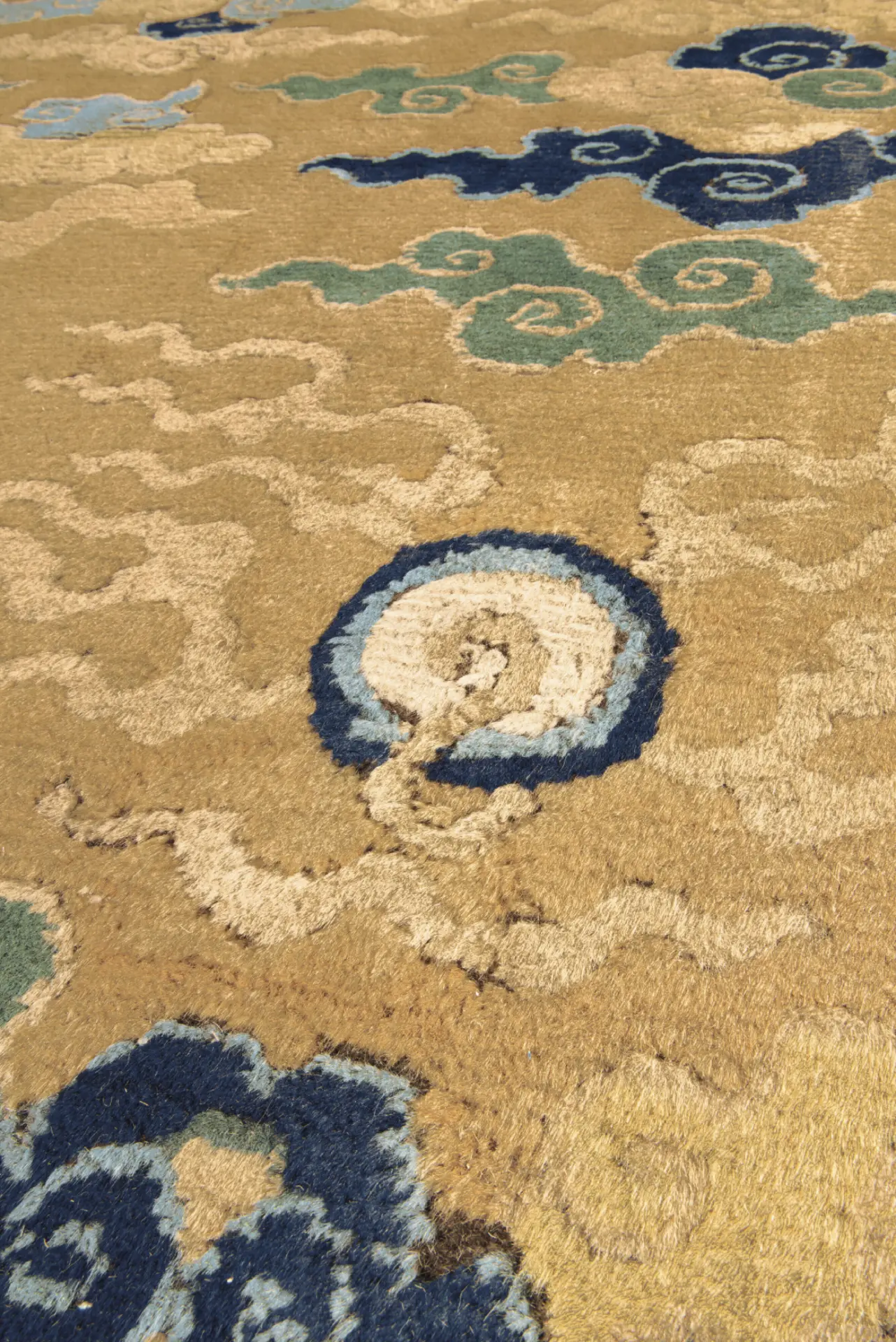
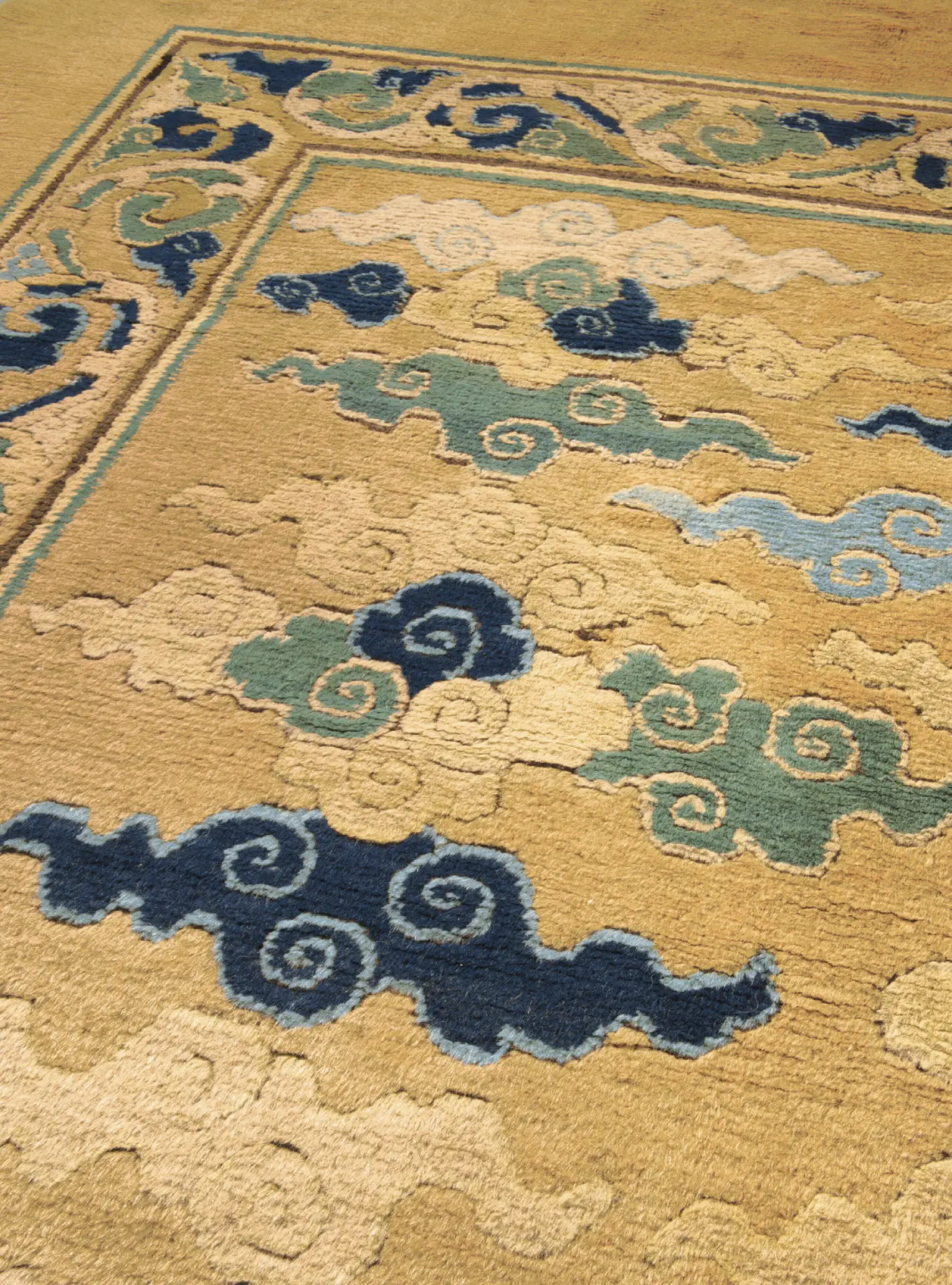
Made of wool on a hemp and silk base, this carpet depicts two dragons chasing a flaming pearl, with auspicious clouds adorning the upper portion and undulating sea waves on the lower section. It is exceptionally well-preserved and stands as a significant example of Chinese weaving craftsmanship.
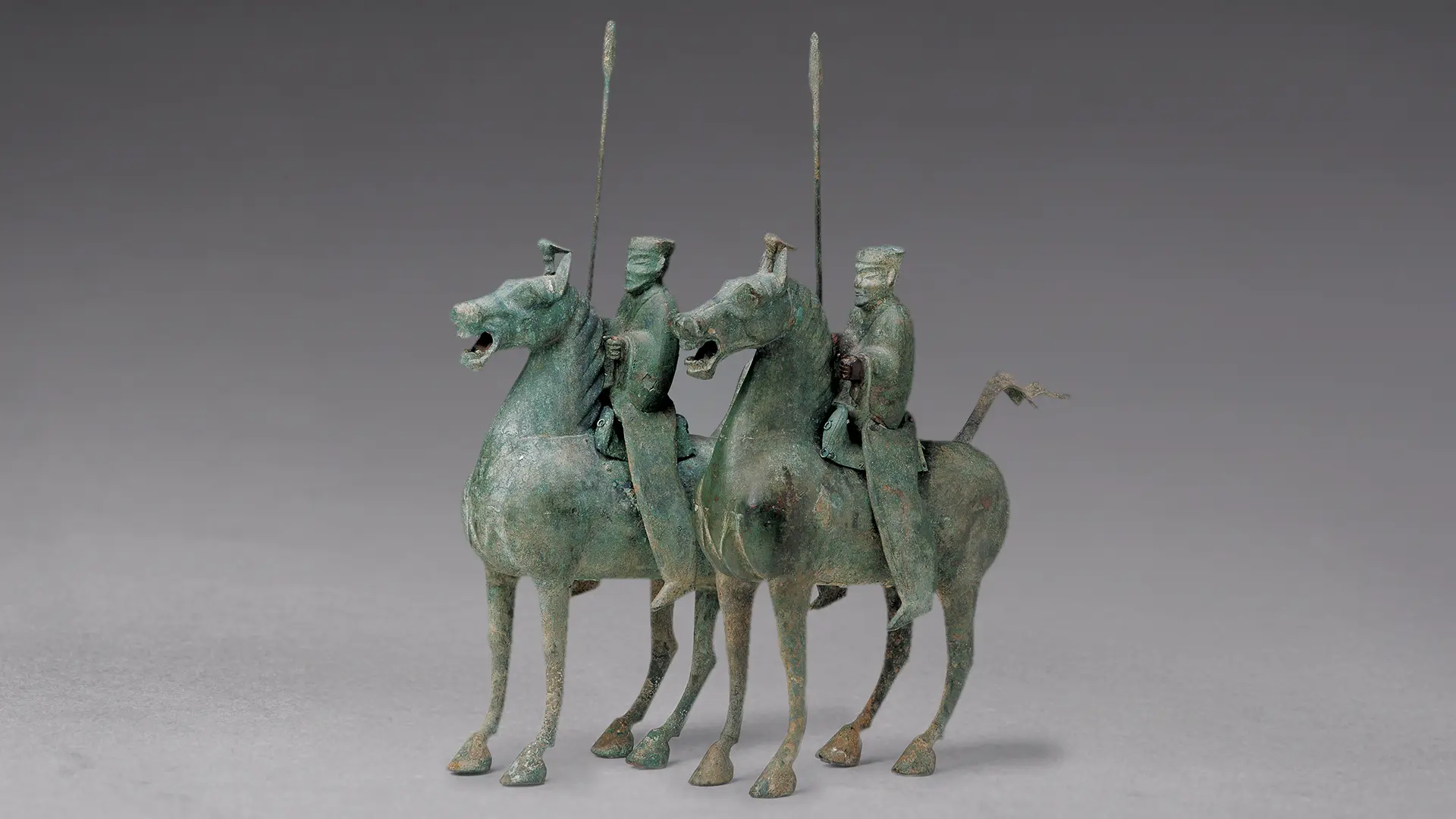
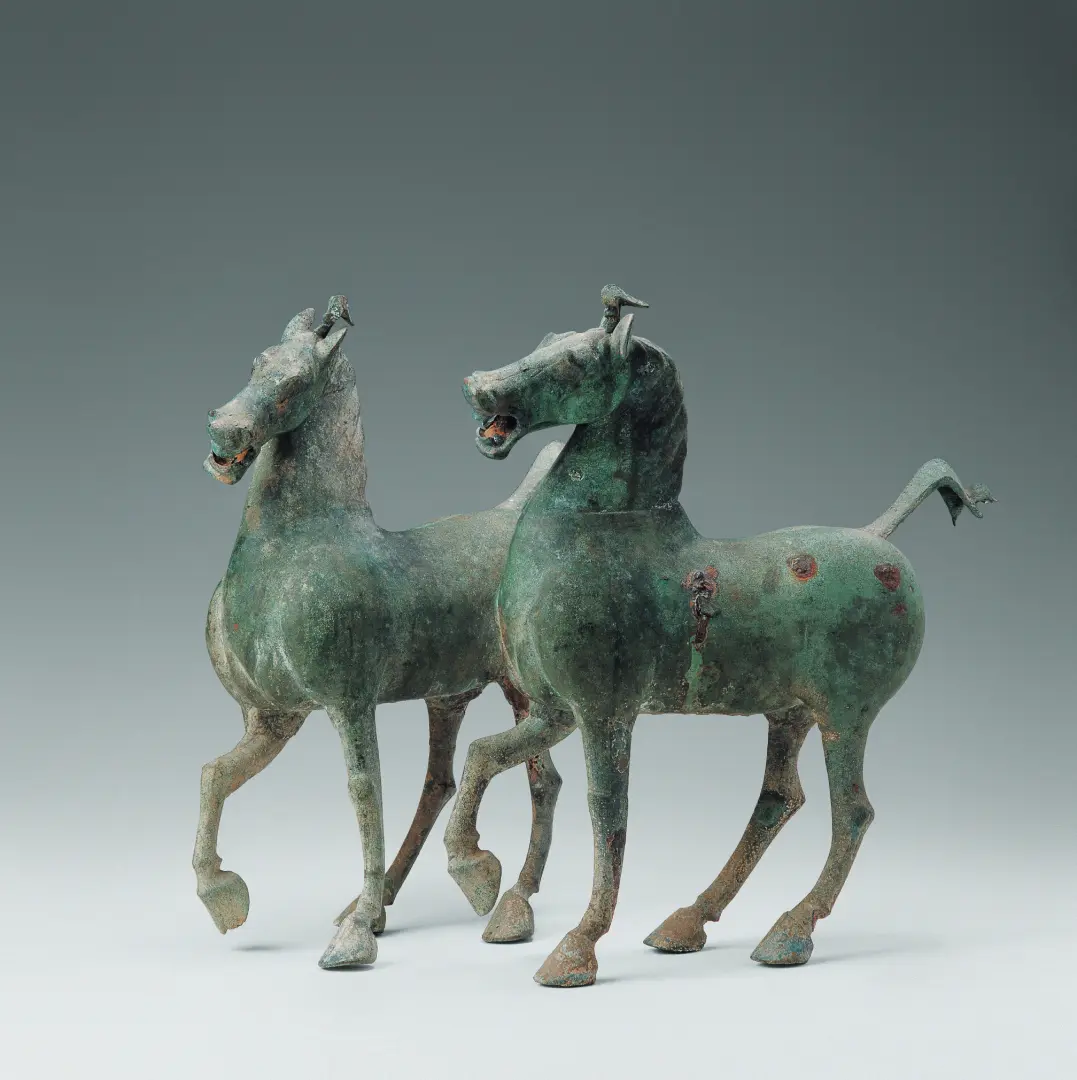
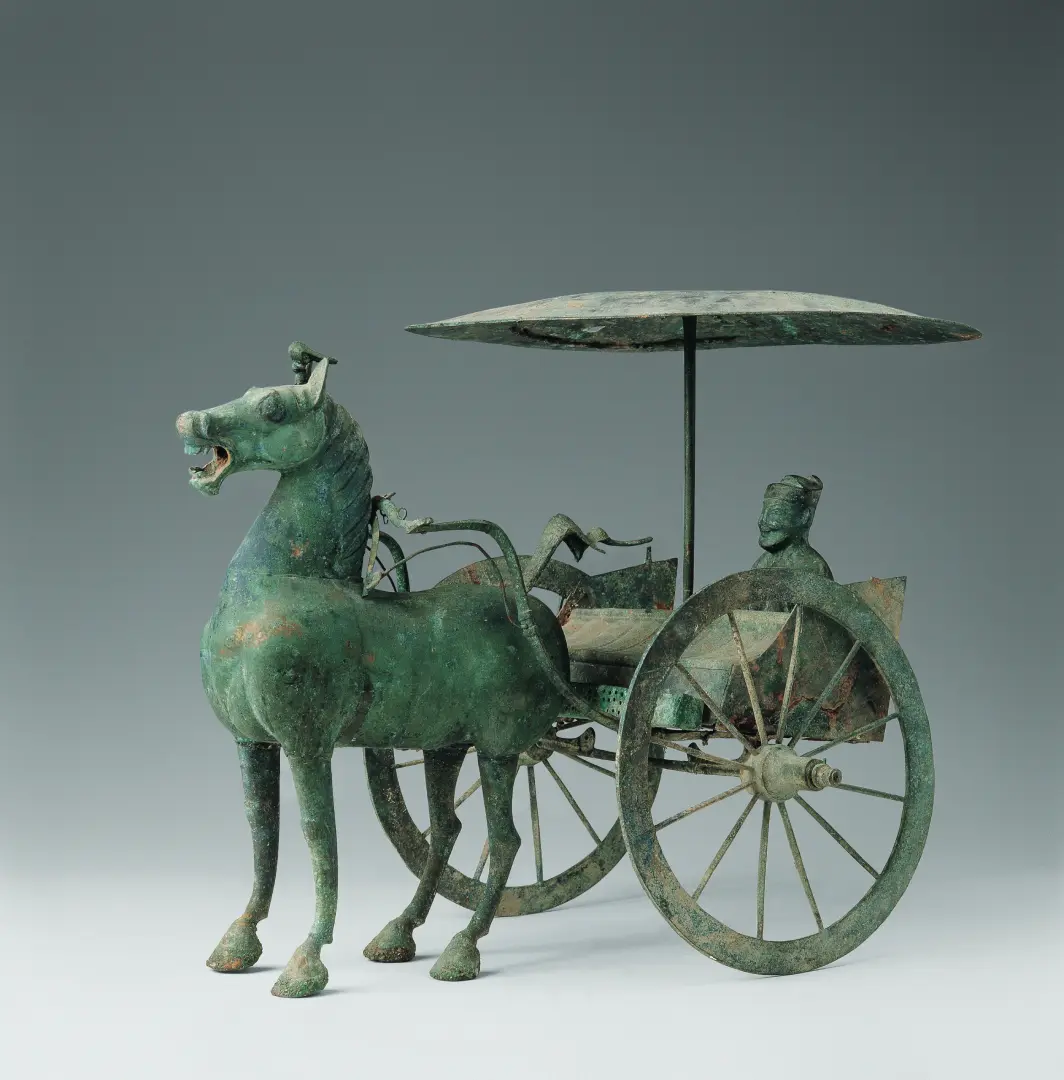
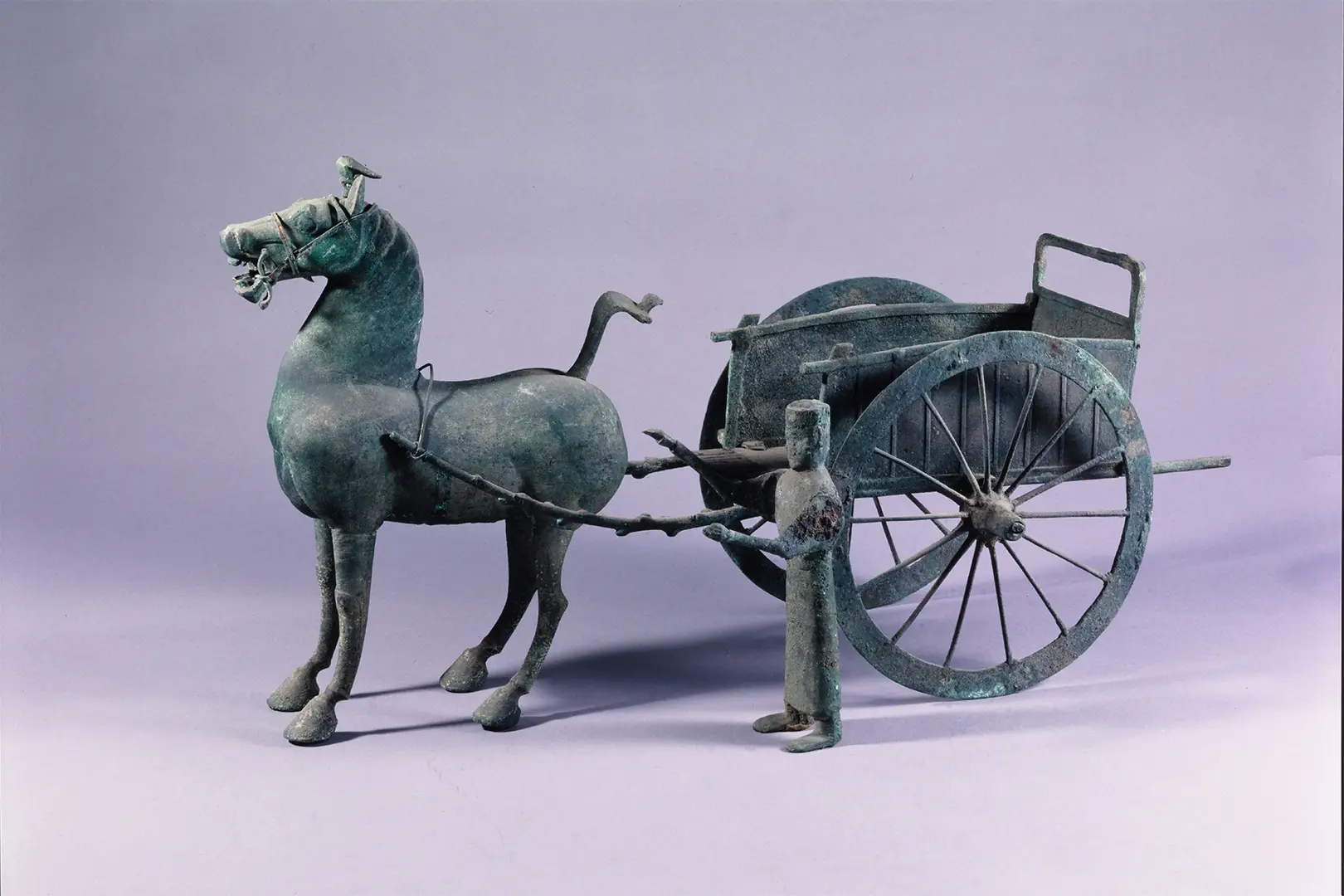
Bronze Procession of Chariots and Cavalry
Han Dynasty
Gansu Provincial Museum
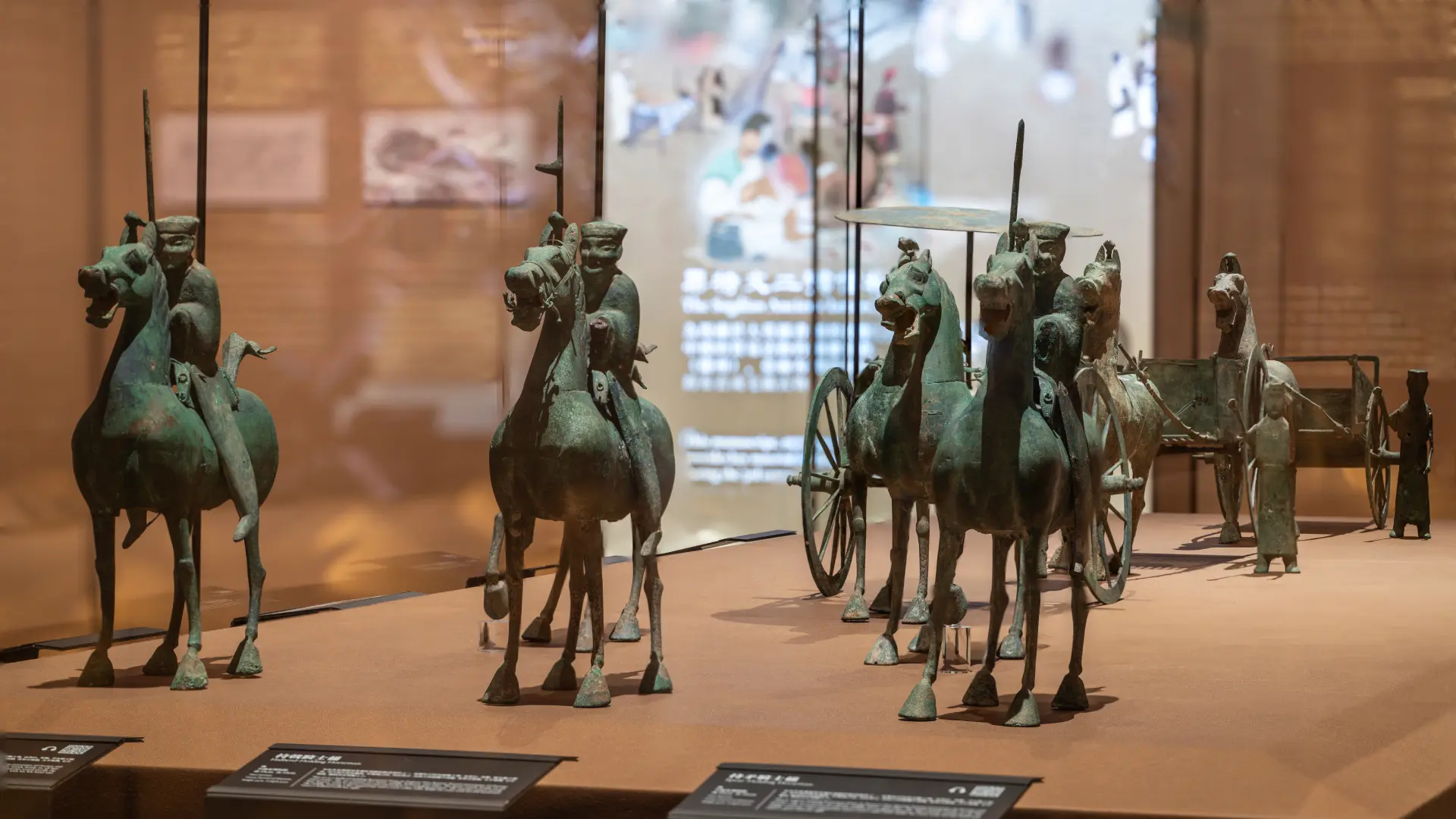
This is an Eastern Han dynasty bronze procession of chariots and cavalry, consisting of eight pieces and five types of bronze figurines. At the front are spear-holding horsemen and halberd-holding horseman. The set consists of a horse, saddle, halberd/spear, and rider. The horse stands firmly on all four hooves, with its head raised and tail arched in a neighing posture. The warrior seated astride the saddle, wearing a flat-topped hat and a cross-collar robe, holds the reins with his left hand and raises a halberd/spear with his right. Followed by two bronze horse, its head is decorated with xiongsheng (a type of headwear), and its tail is tipped with a jie silk tassel. The dynamic pose—raised leg, turned head, and open mouth—captures the moment of a neigh, conveying a powerful sense of majesty. In the middle of procession, is a light carriage. The set comprises a carriage, a horse, an umbrella, and a coachman. The carriage features two forward-curved shafts connected to the crossbar and yoke. Its base is latticed in a diamond pattern. At the rear, there are two wagons. The set consists of a coachman, a wagon, and a horse. The wagon is rectangular in form. The horse has its head raised, tail arched, and mouth open as if neighing.
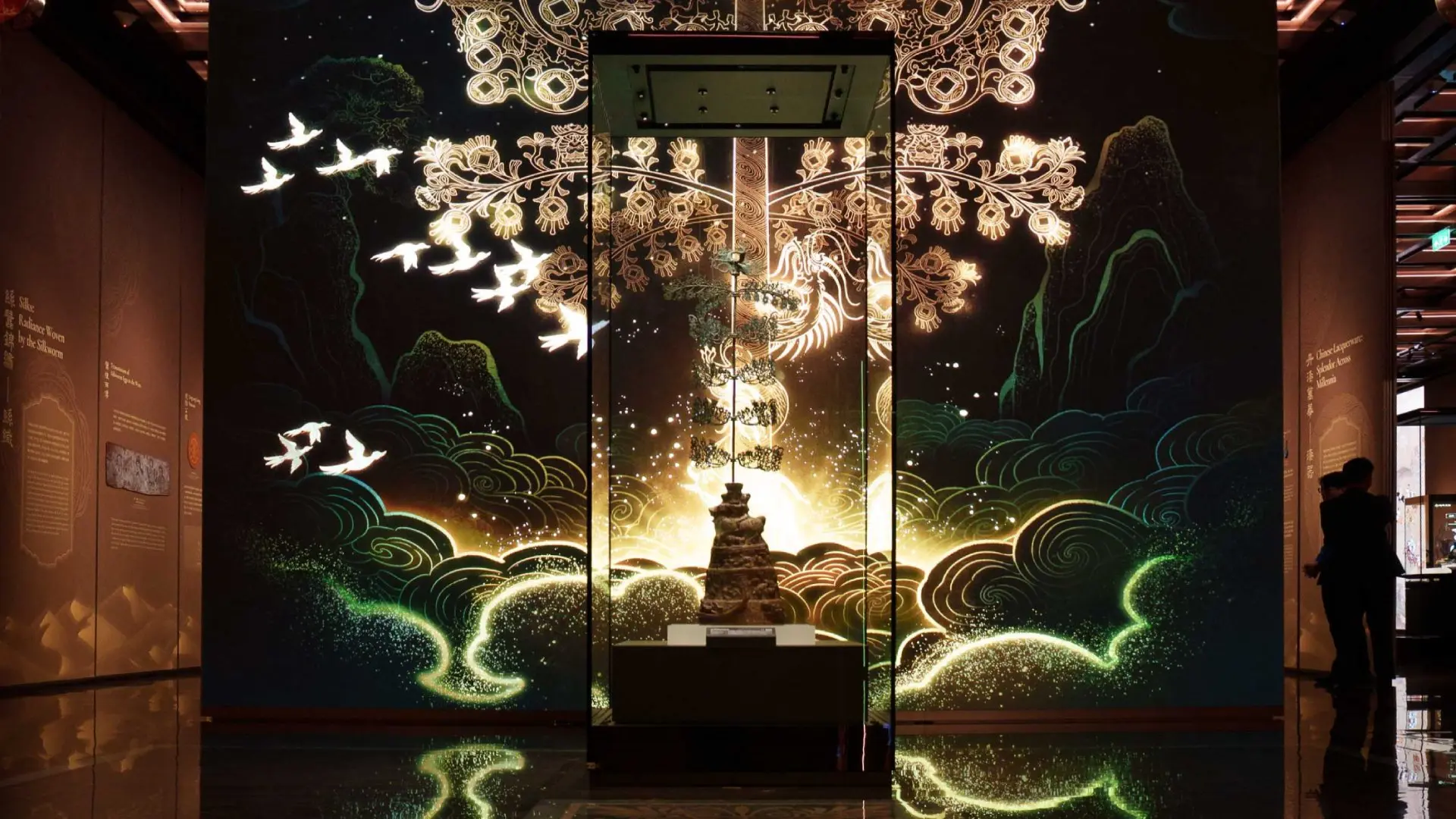
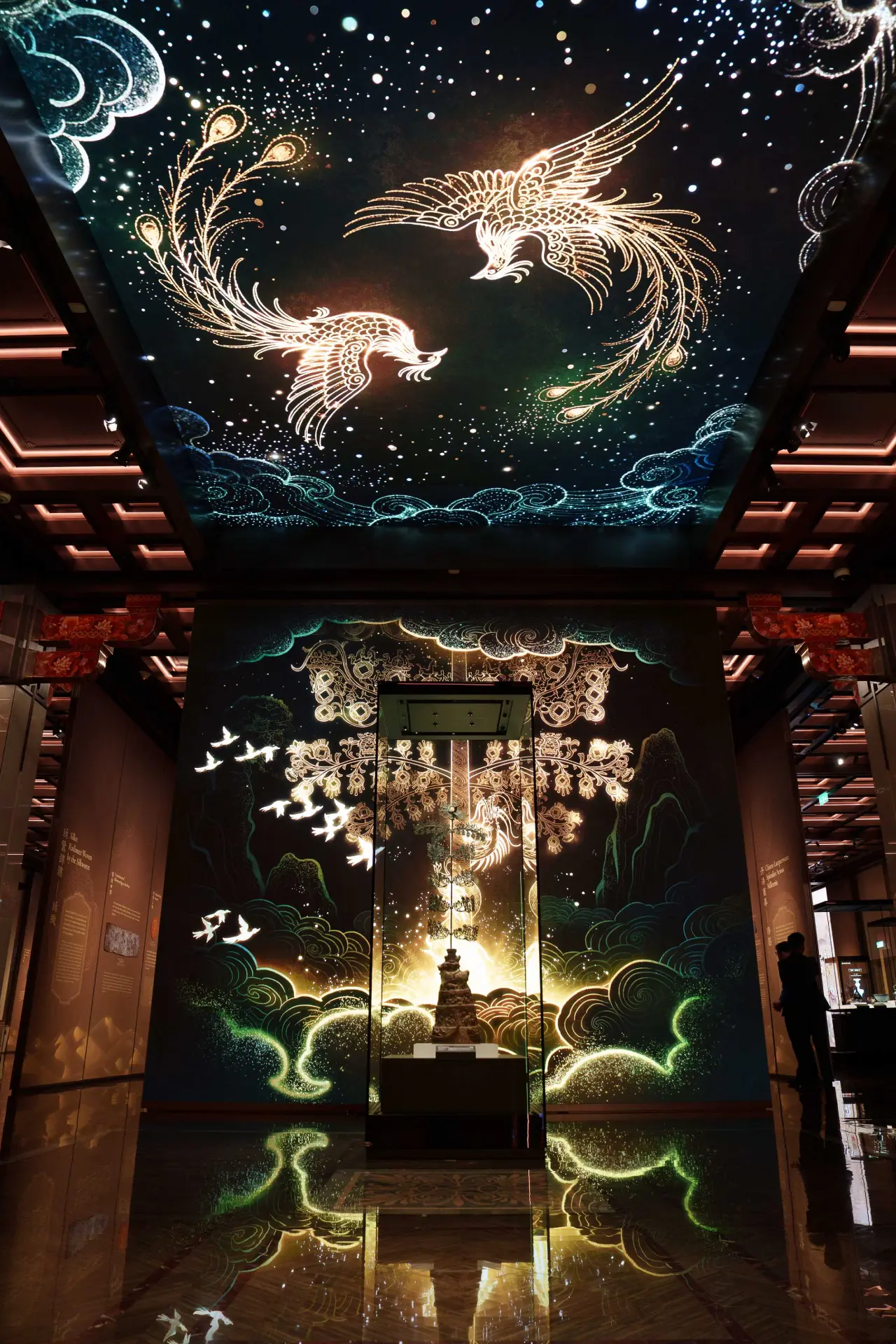
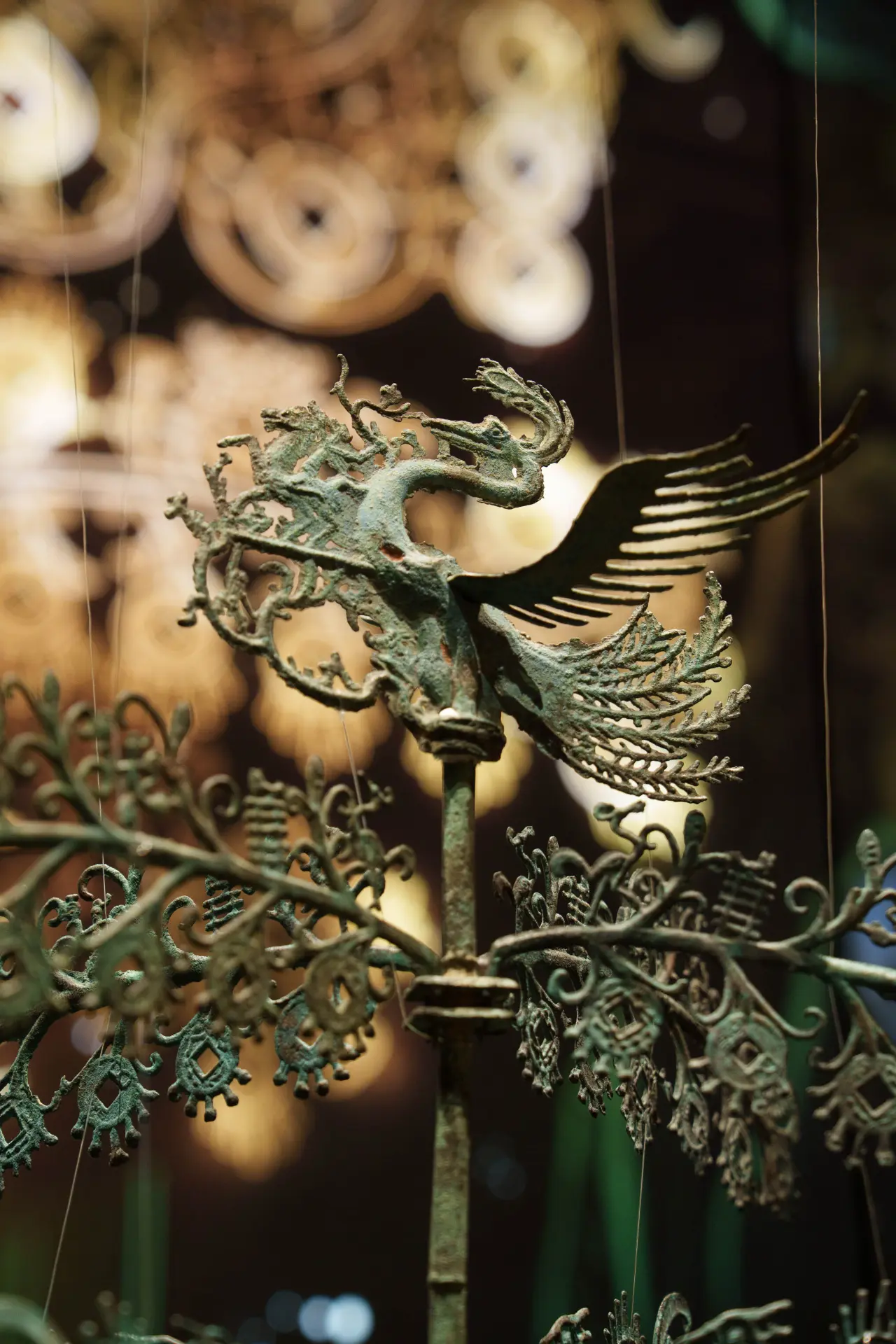
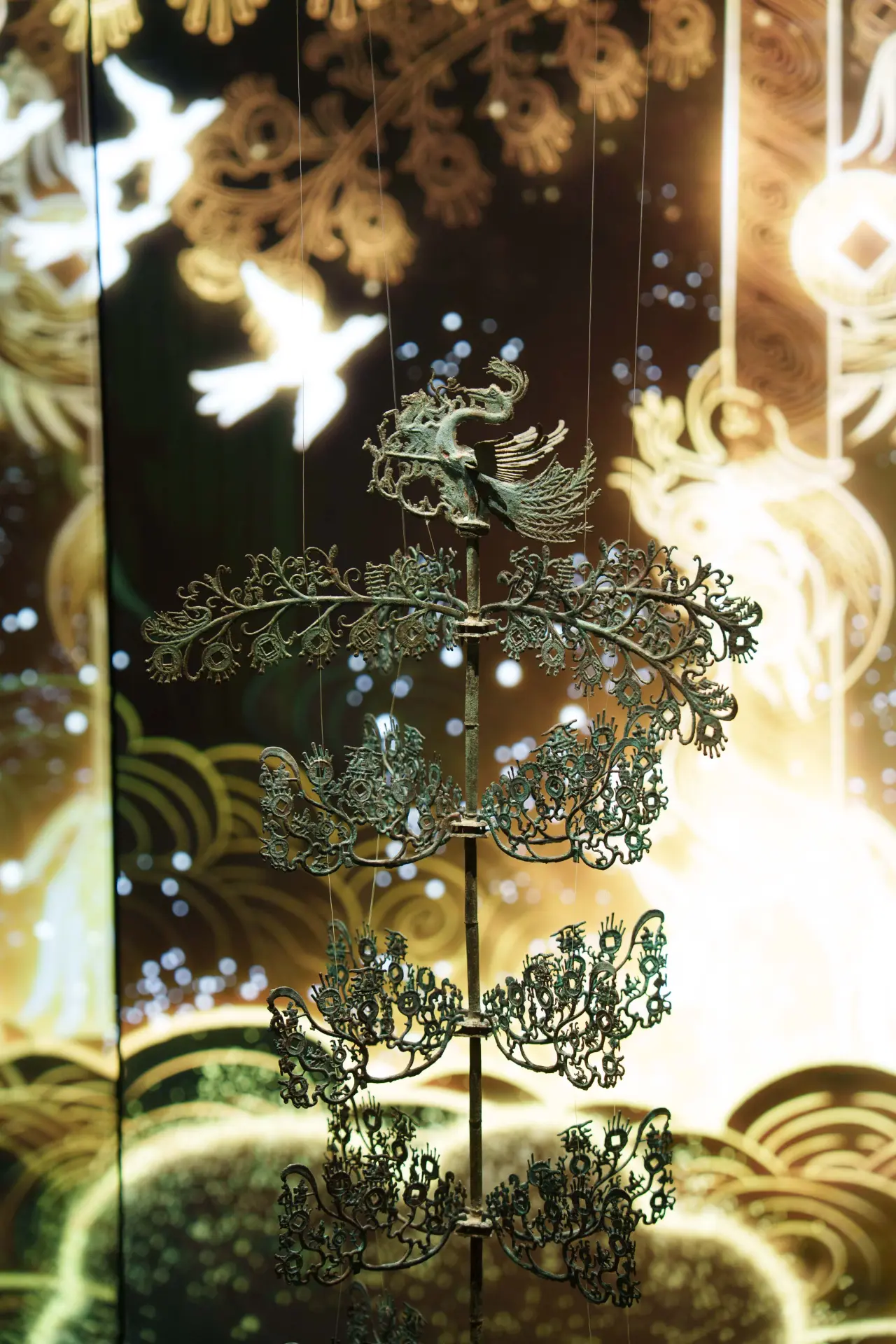
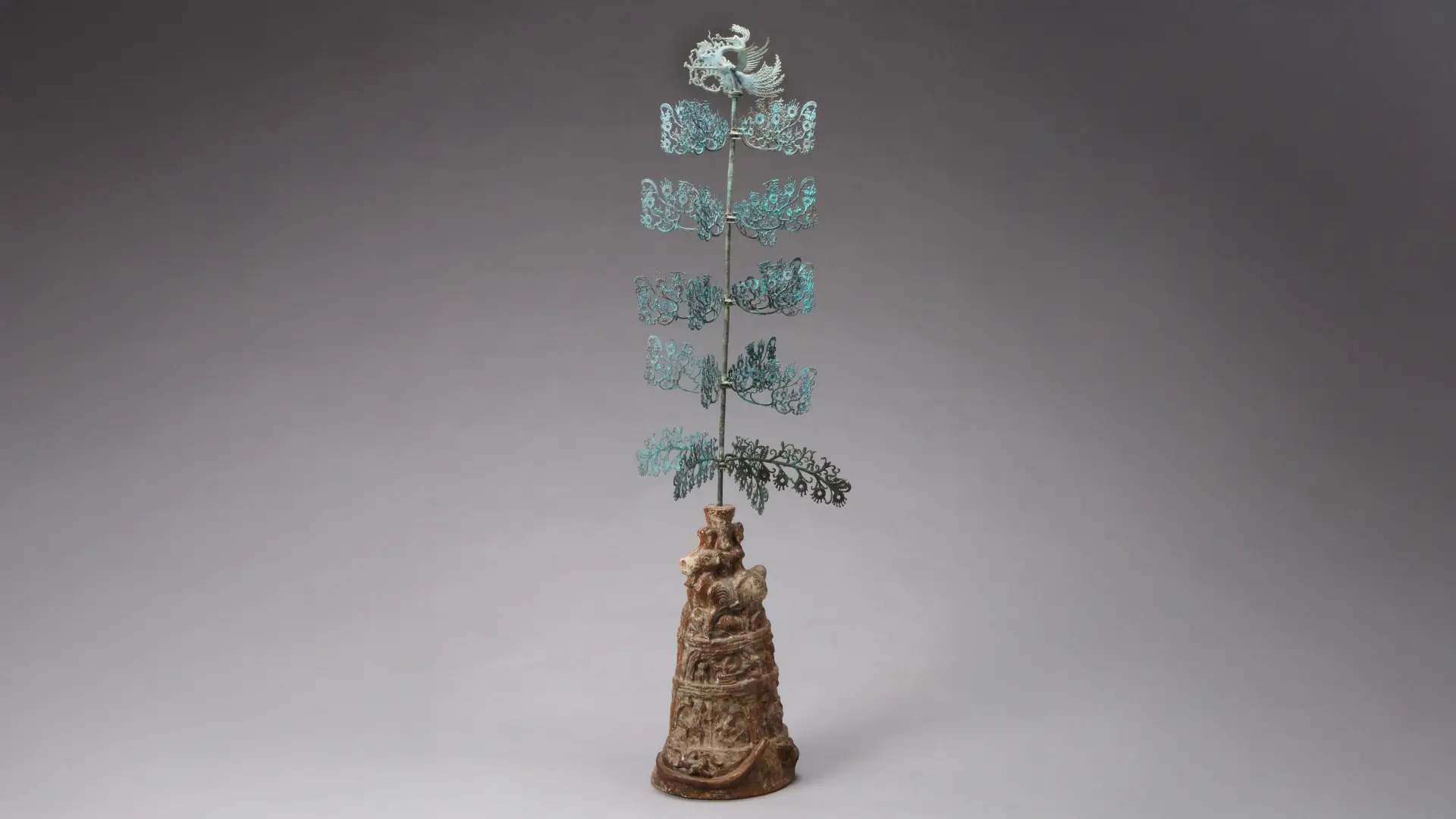
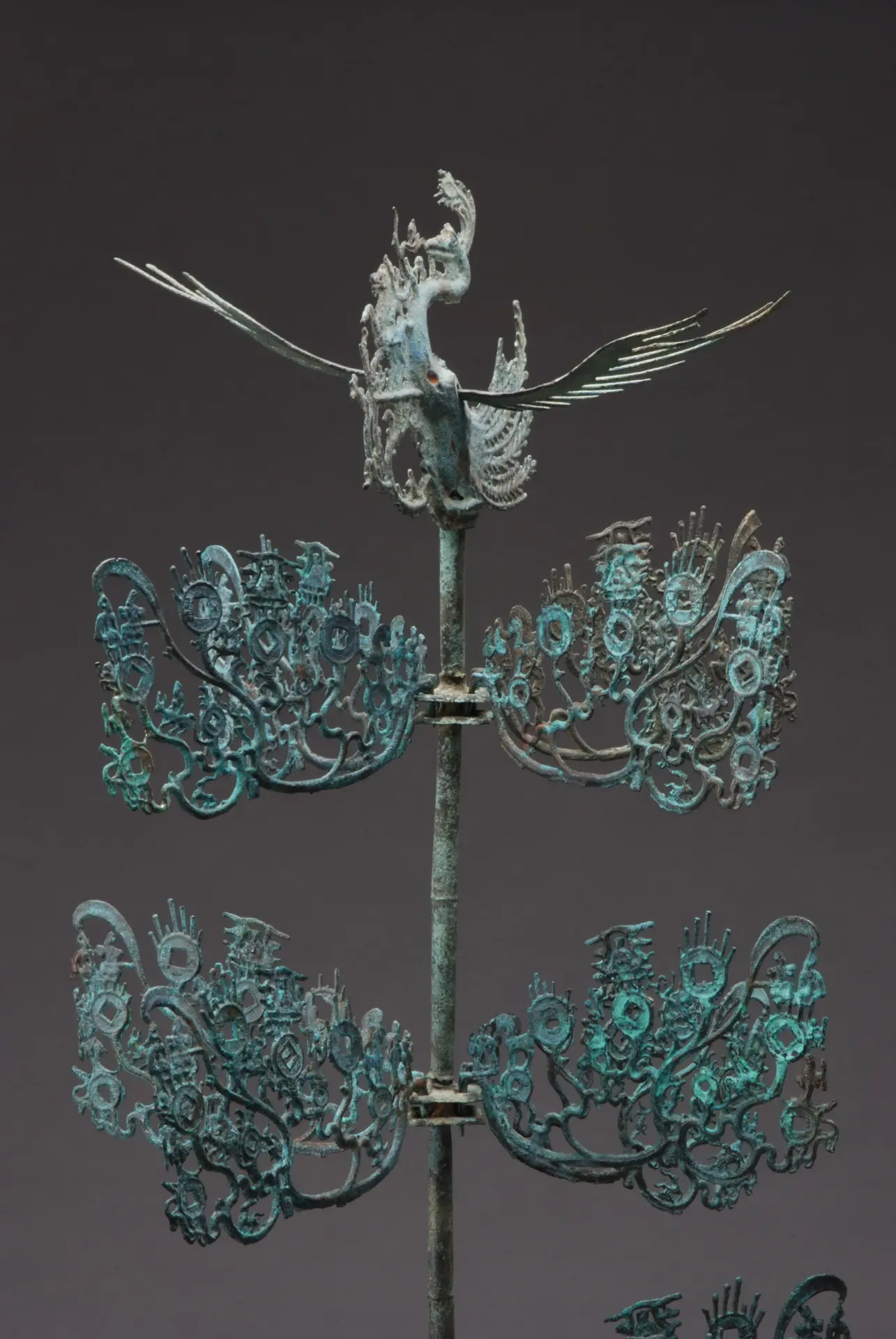
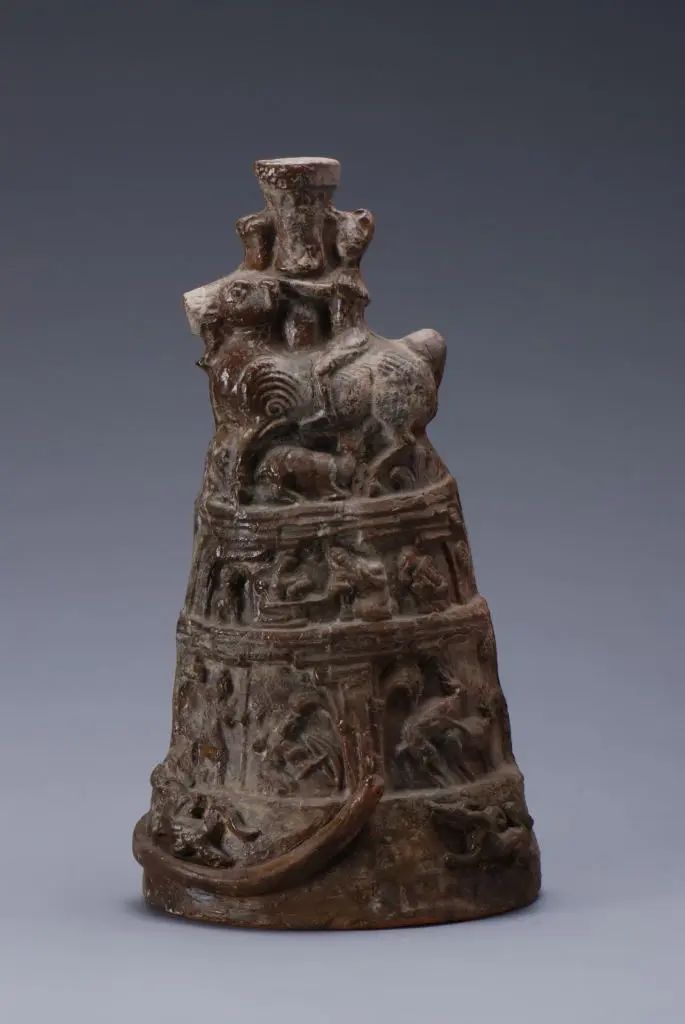
Bronze Money Tree, Eastern Han Dynasty
Eastern Han Dynasty
Mianyang Museum
This "money tree" consists of a ceramic base, a bronze trunk, and leaves. The base is decorated with four tiers of reliefs depicting auspicious beasts, deer, lizards, and figures. The cylindrical trunk comprises five welded sections, each with five square struts and corner holes for attaching leaves. The leaves are decorated with foliate patterns, birds, dancing figures, and winged vermilion birds. Lower leaves feature square-holed coins inscribed "wuzhu" or with star charts. The apex depicts the Queen Mother of the West seated atop a dragon and tiger, surrounded by figures, horses, deer, vermilion birds, and coins.
*The original artifact will be displayed from January through March, 2026, after which a replica will be on view for the remainder of the exhibition.
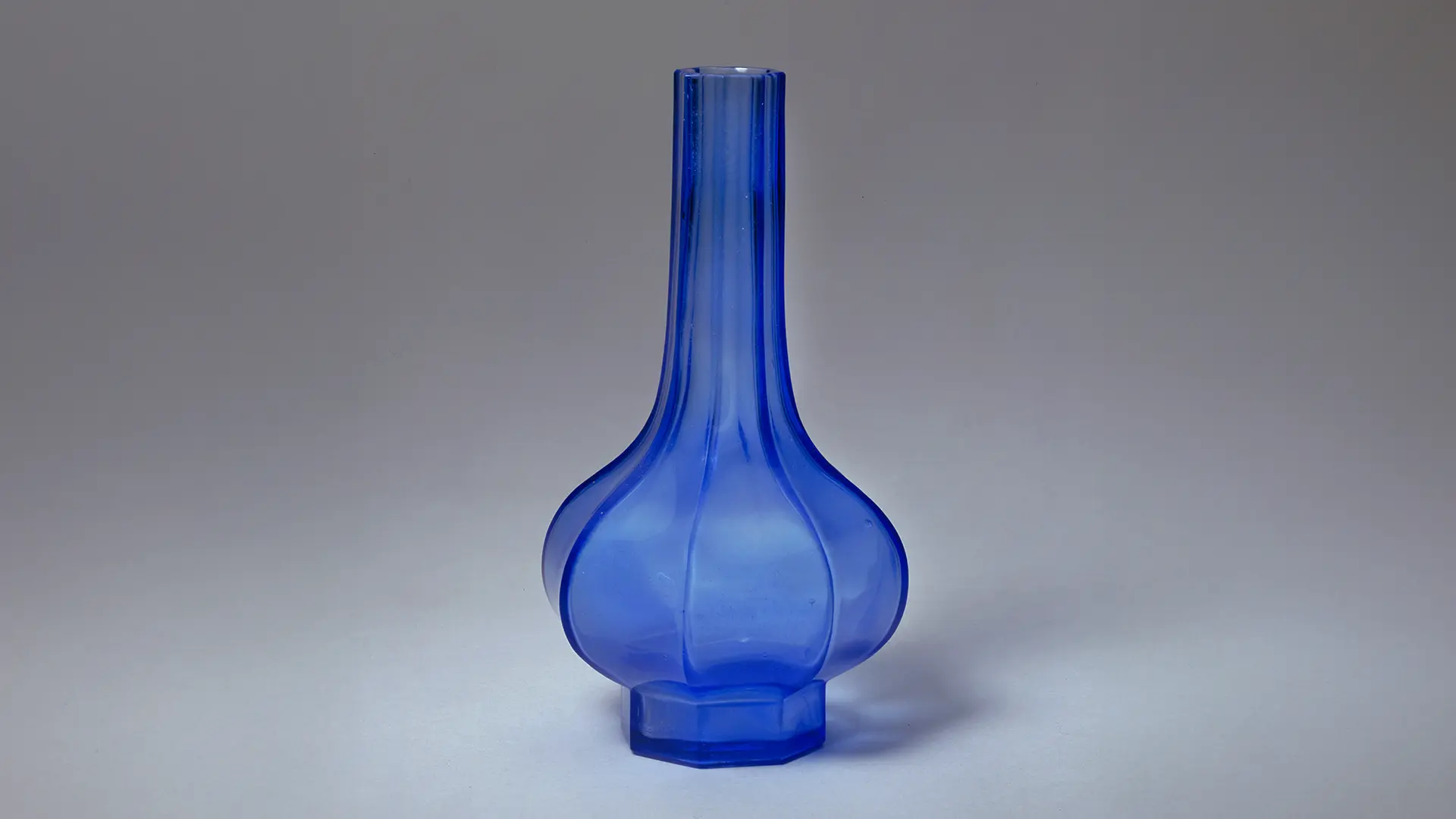
Octagonal Blue Glass Bottle, Yongzheng Period
Qing Dynasty
The Palace Museum
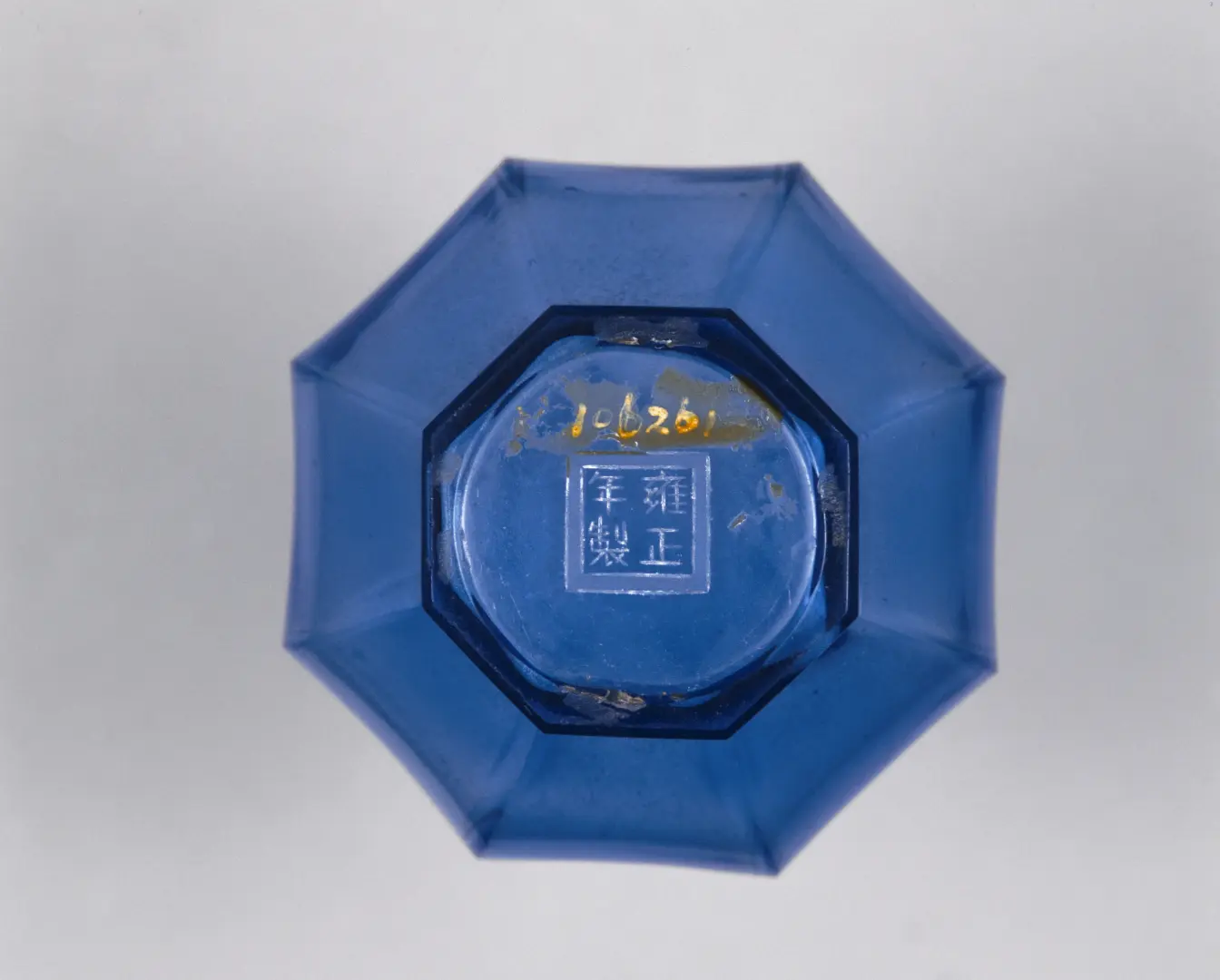
This object is a blown-molded transparent gem-blue glass bottle. The surface has been polished, resulting in eight facets, each with a subtle concavity. The body is plain and devoid of decoration. The base is incised with a two column “Yongzheng Nian Zhi” (Made in the Yongzheng Reign) mark in kaishu (regular script).
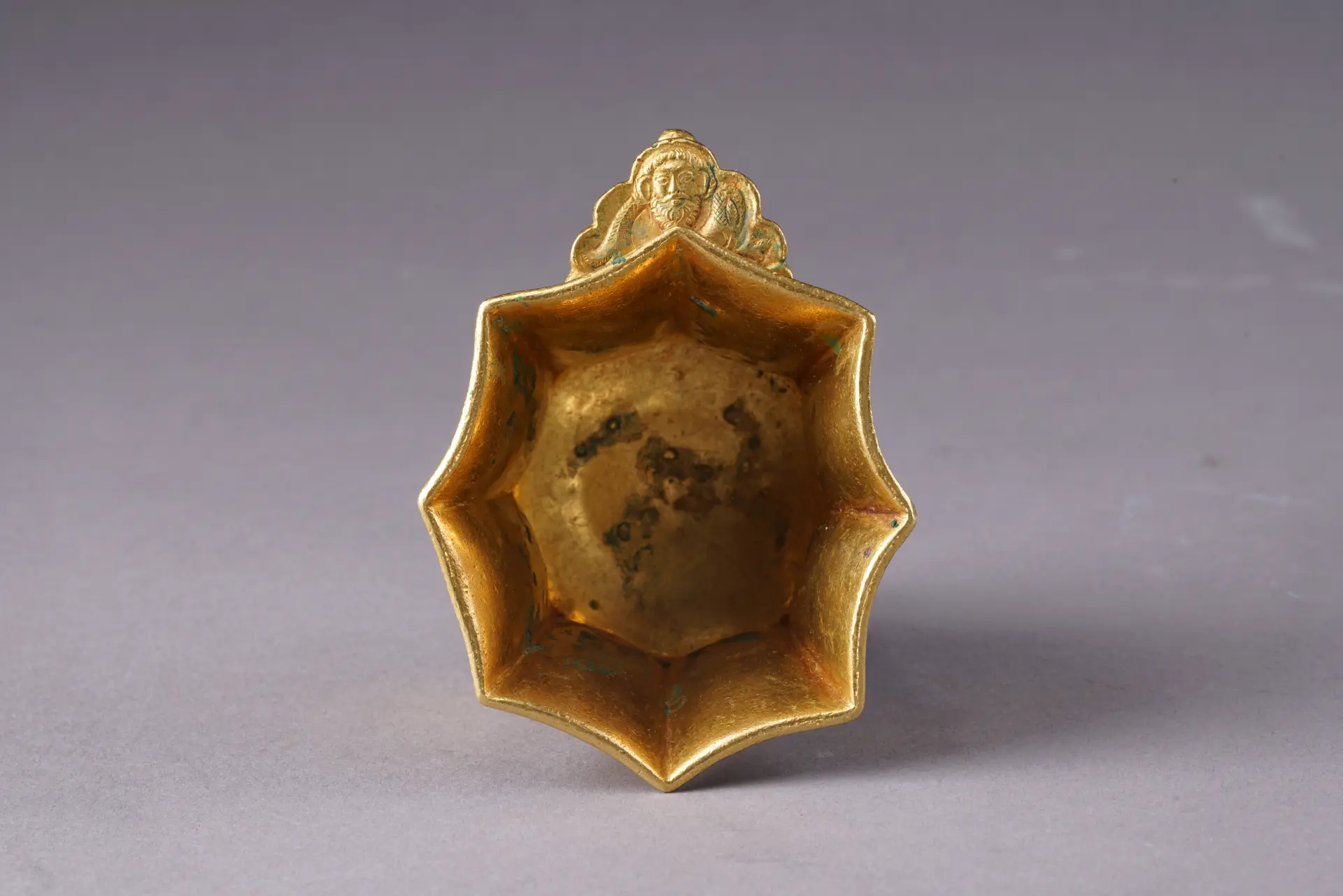
Octagonal Gold Cup with Figural Decorations, Tang Dynasty
Tang Dynasty
Shaanxi History Museum
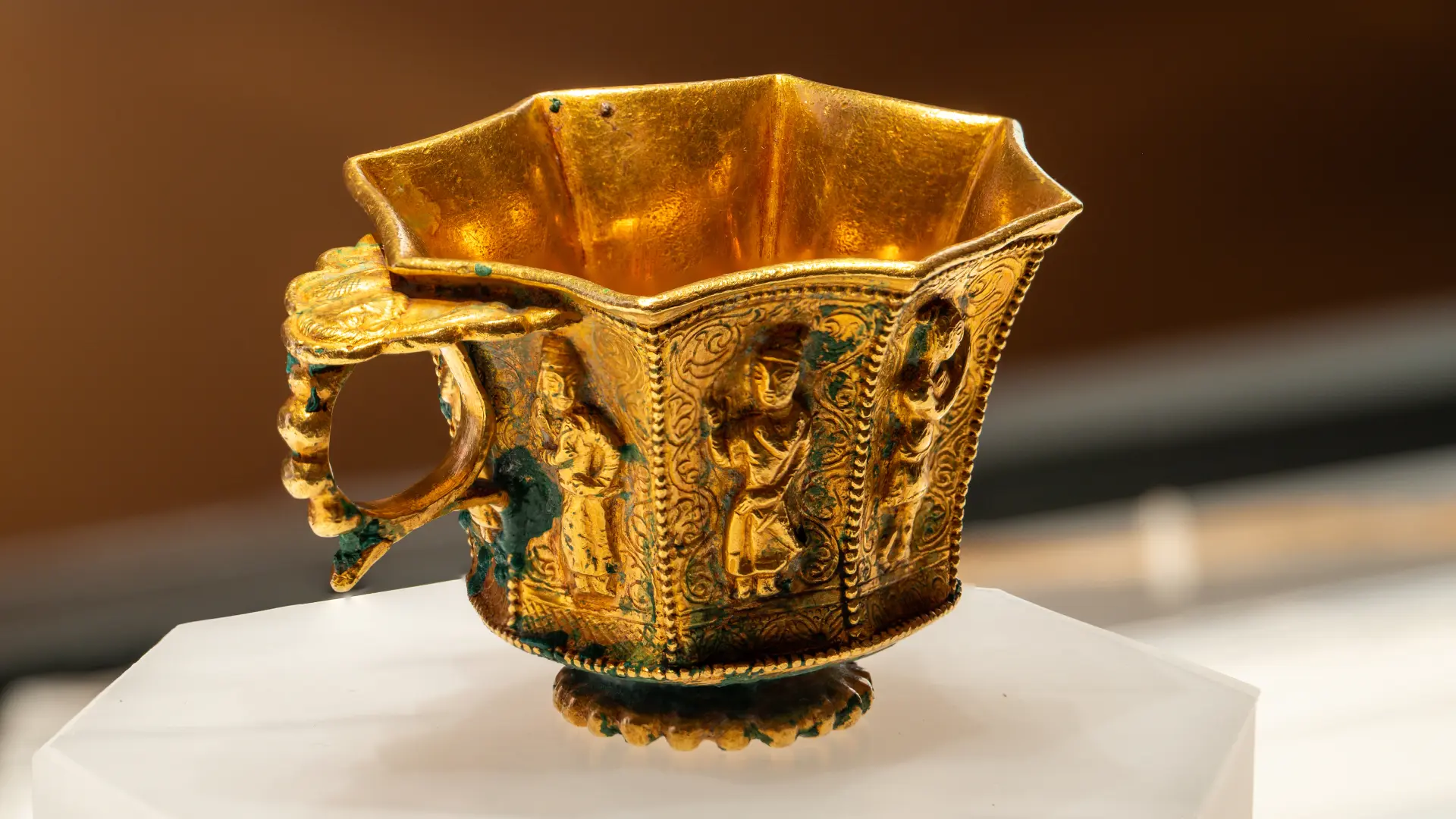
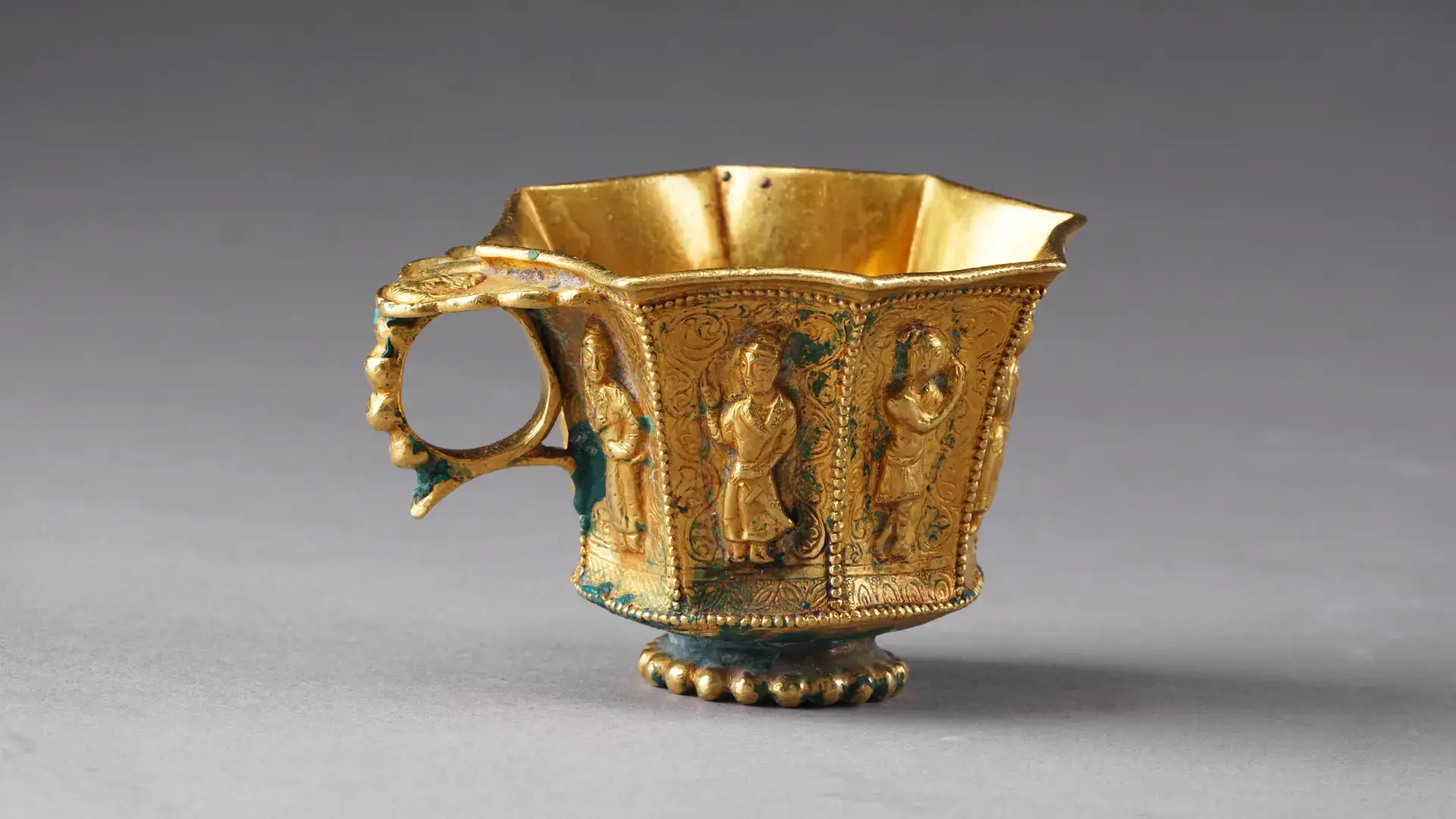
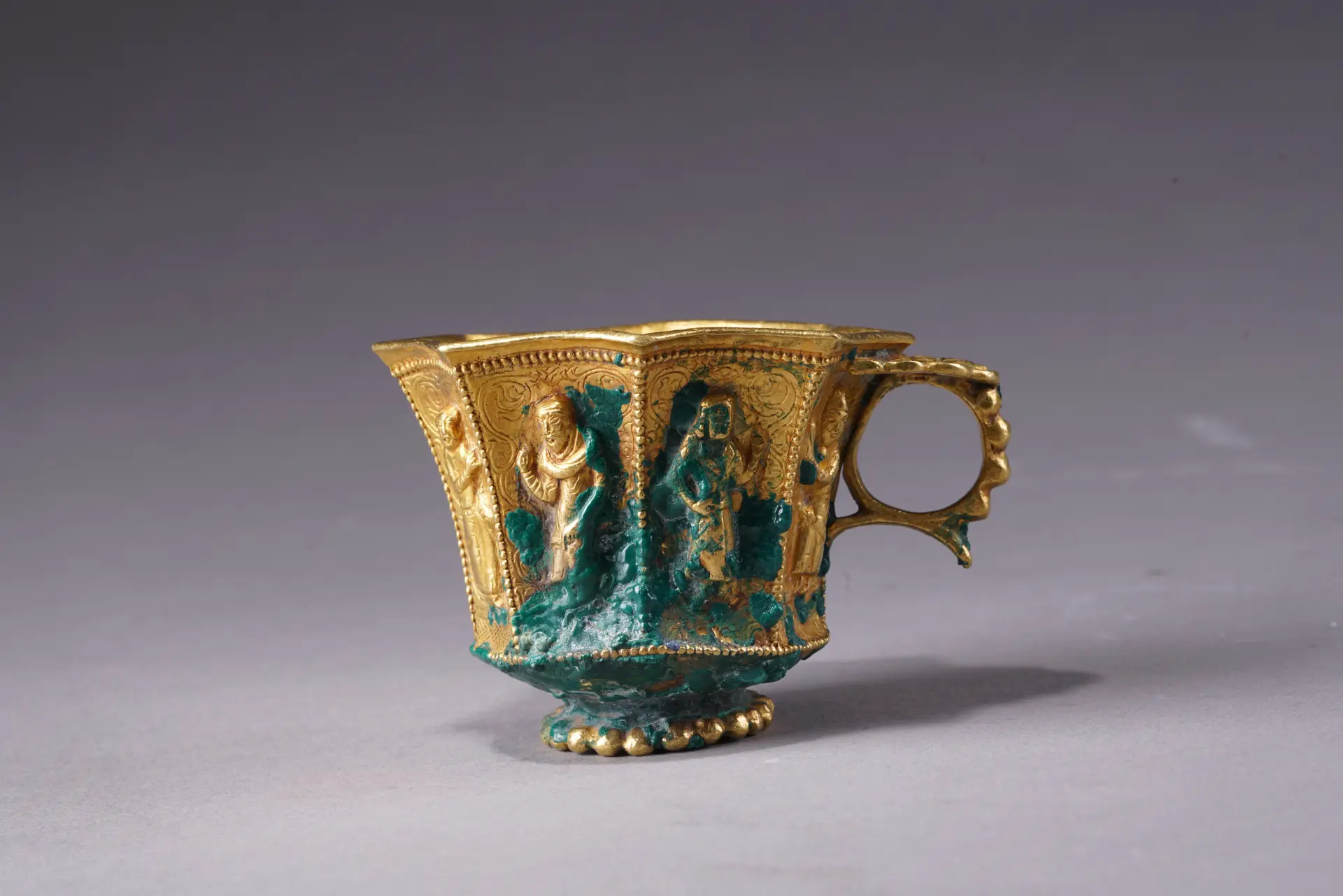
This Tang dynasty handled cup masterfully blends Chinese and Sogdian metalworking traditions. The octagonal vessel is entirely chiseled with a scrolling vine pattern. Each facet, divided by pearl borders, depicts figures with deep-set eyes and prominent noses characteristic of Central Asian peoples. The handle’s thumb rest features a Sogdian-style head. It stands as a classic example of cultural exchange along the Silk Roads of the Tang dynasty.
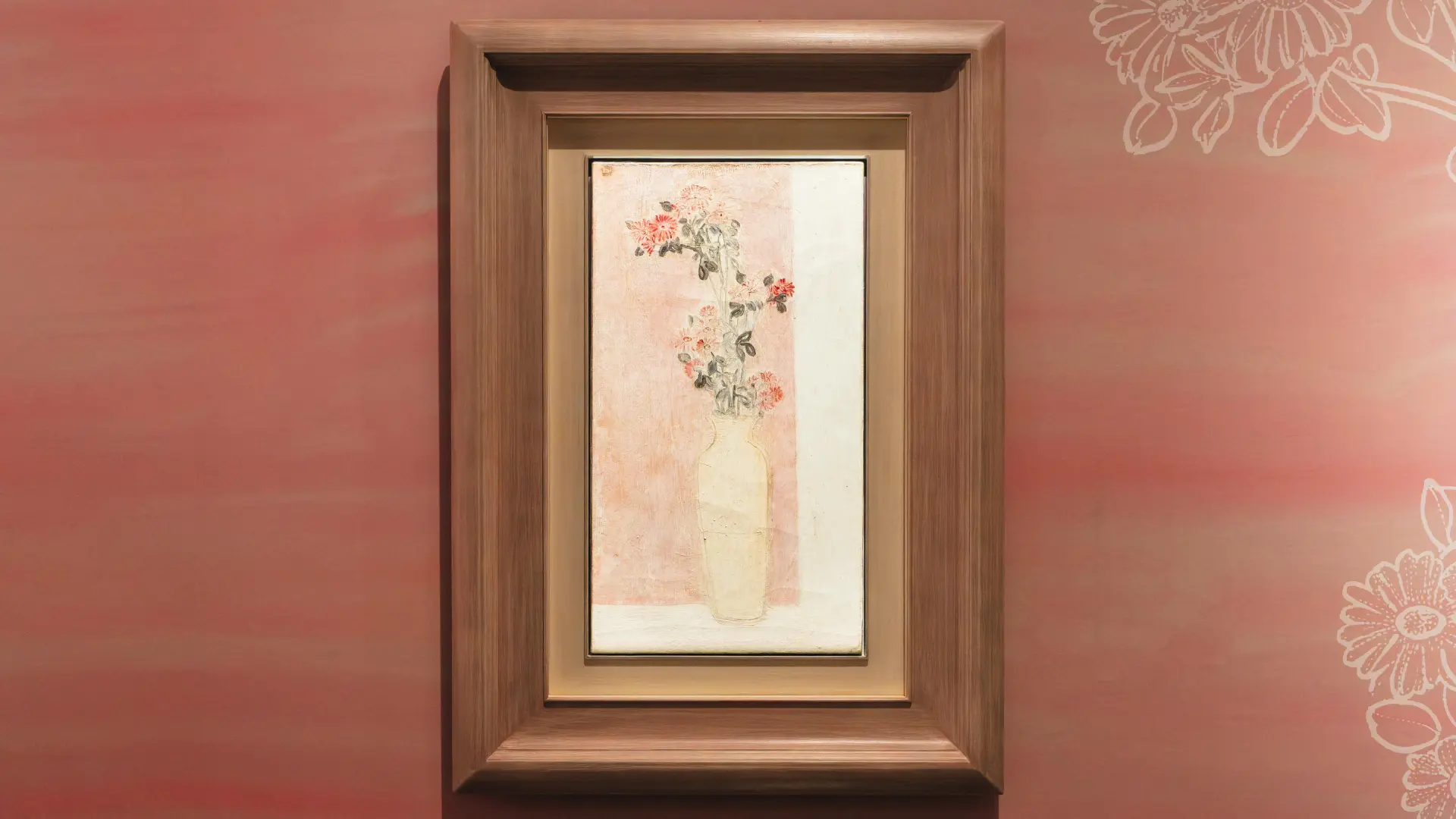
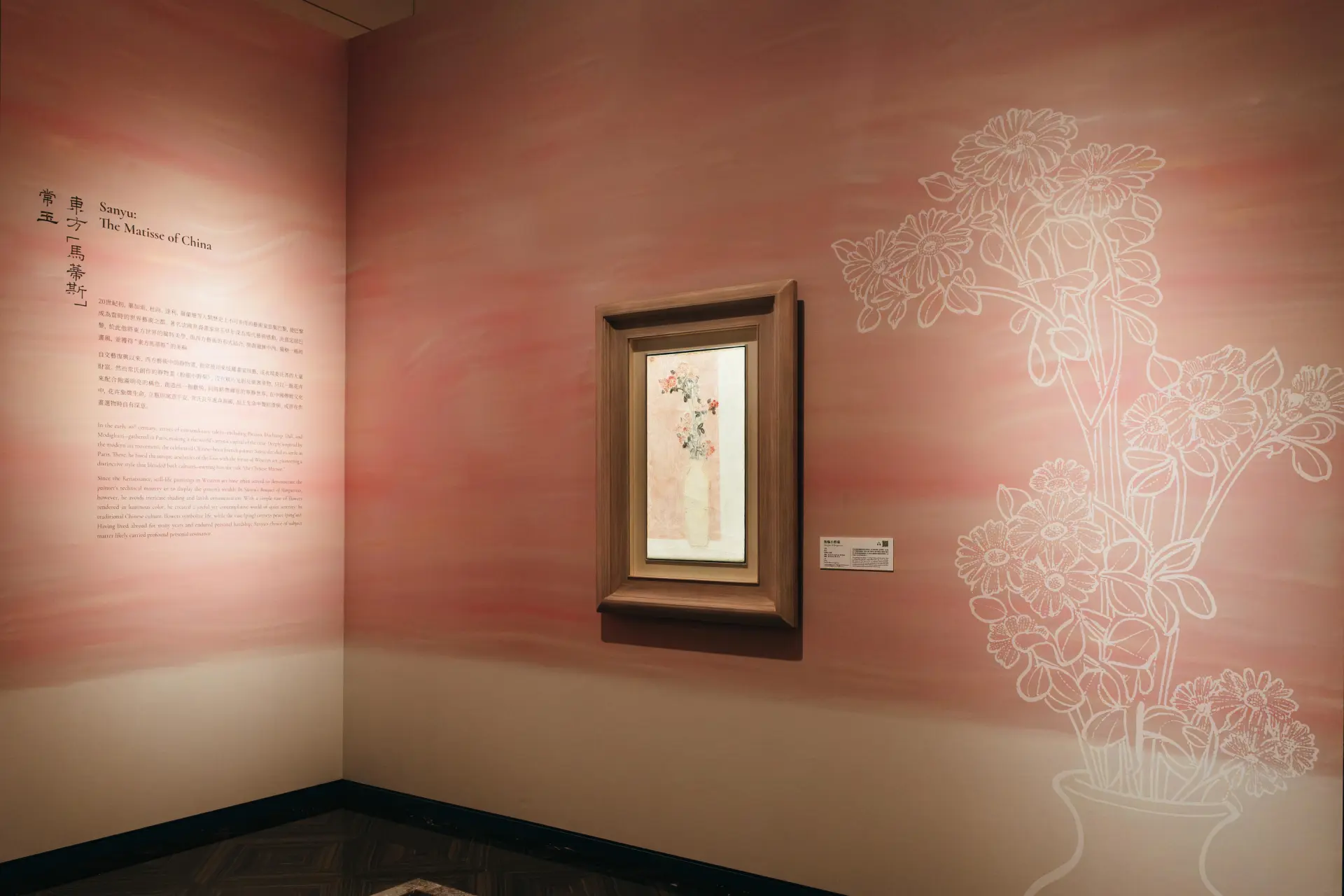
Sanyu, Bouquet of Marguerites
1931
Private Collection, Hong Kong
This painting is by Sanyu, a renowned Chinese-French artist. With its refined lines and rich, essence-filled colors, the work embodies the concept of "five tints of ink" in traditional Chinese painting. Representative of Sanyu's artistic production in the 1930s, this work introduces the concept of three-dimensional perspective of the West into the planar spatial layout common in Eastern art.

Book your visit
For the best experience, we recommend booking in advance.
Walk-in tickets are also available at the door, subject to capacity.
Each session has limited space and operates on a first-come, first-served basis.
GroupsWe welcome group visits for parties of 20 to 50 guests.
Please reserve at least 14 days in advance so we can prepare for your visit.
Travel Tour GroupsWe accommodate travel tour groups of over 50 guests.
To get started, please submit your request using the form at least 14 days before your intended visit.