
Luminous Brilliance: The Artistry of Zibo Liuli

Current
LUMINOUS BRILLIANCE: The Artistry of Zibo Liuli
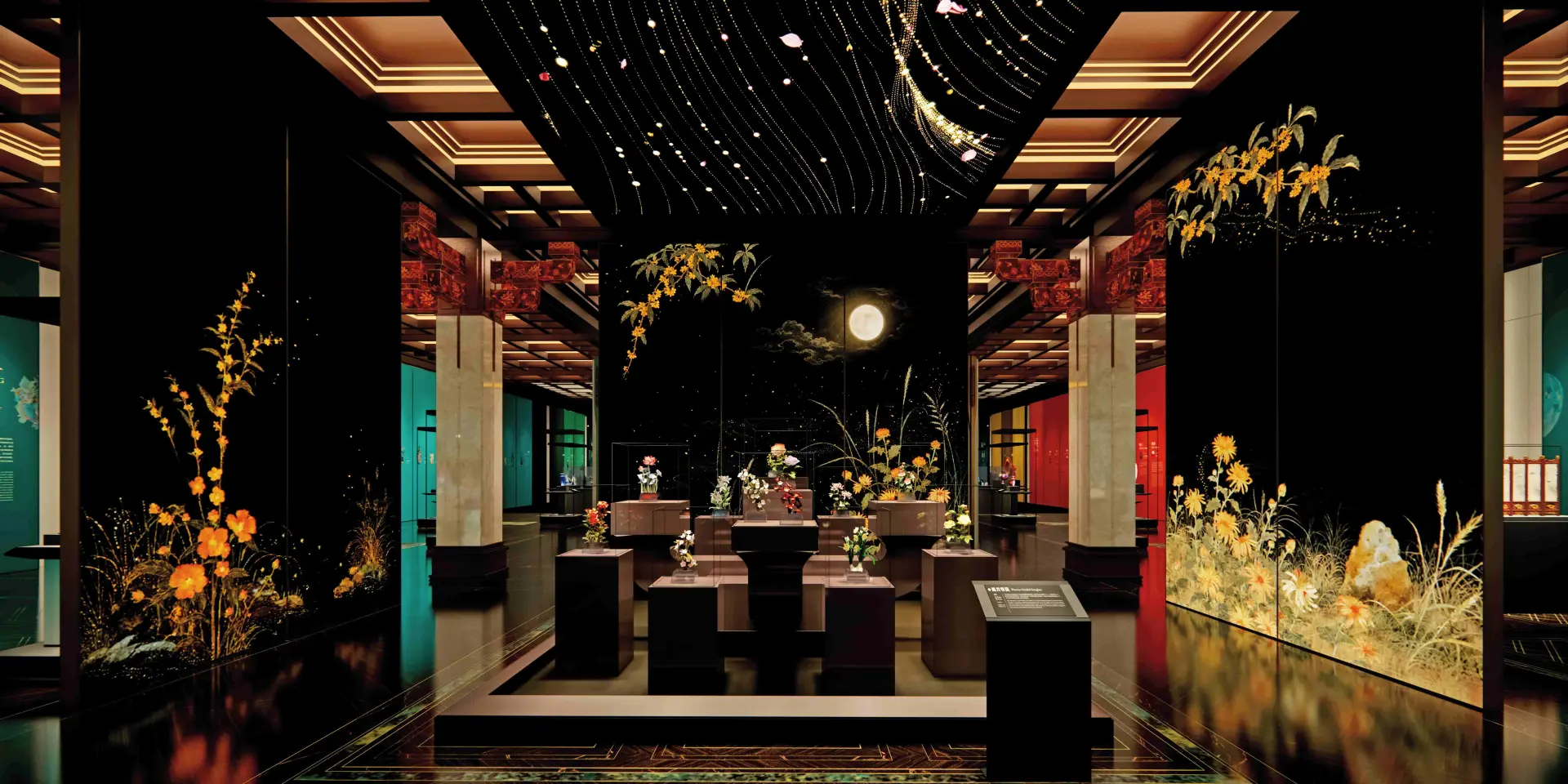
In collaboration with the National Museum of China and the Zibo Ceramic and Glass Museum, POLY MGM MUSEUM presents “Luminous Brilliance: The Artistry of Zibo Liuli” Renowned as the historic heart of Chinese glassmaking, Zibo in Shandong Province has cultivated a rich tradition shaped by centuries of cultural exchange along the ancient Silk Road.
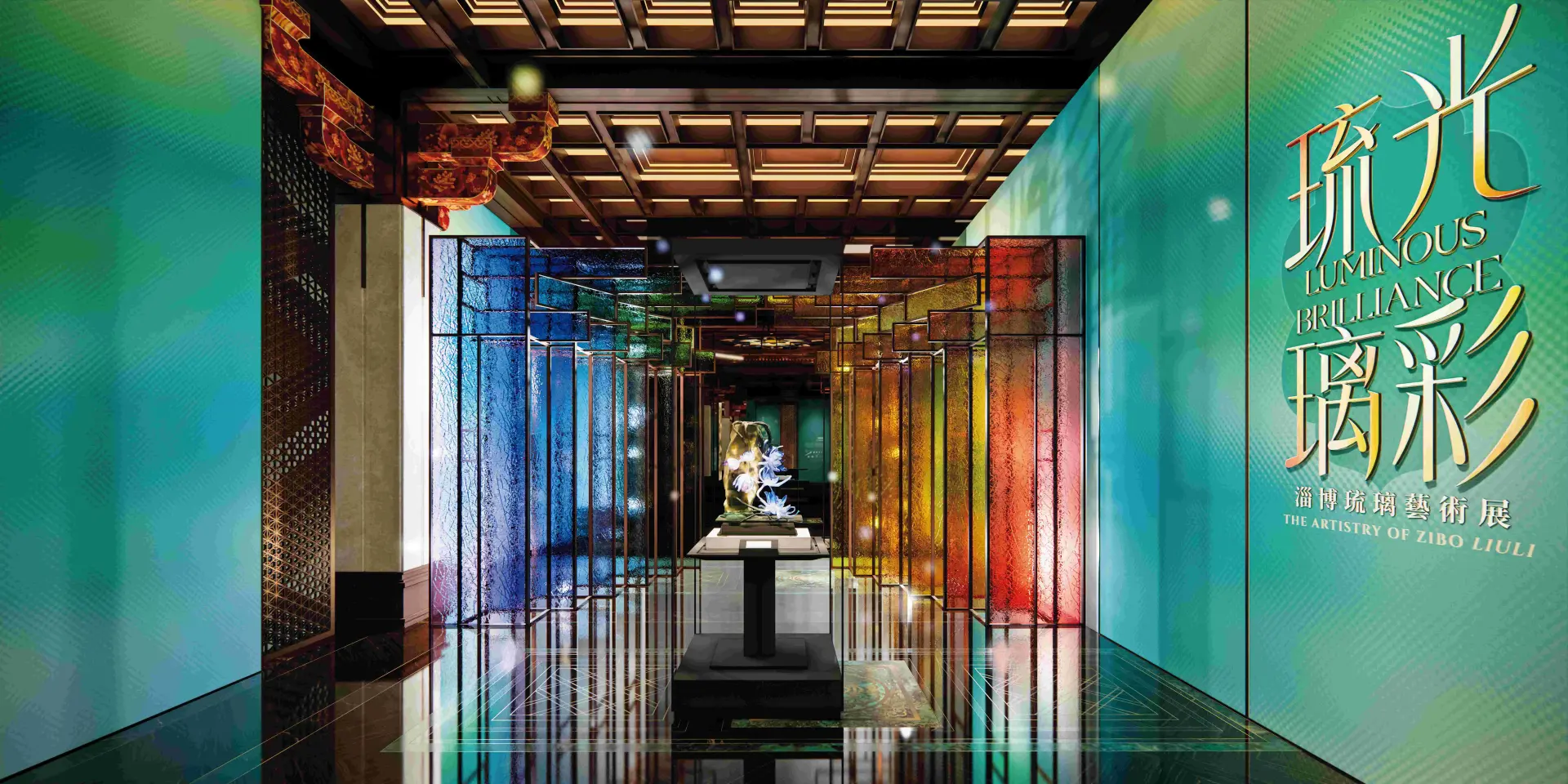
Featuring nearly 180 historic artifacts and contemporary creations, the exhibition traces the 3,000-year evolution of Chinese liuli through three thematic chapters: “Forging a Millennial Legacy,” “Eternal Iridescence,” and “Exquisite Objects of Radiant Beauty.” The selection spans rare Warring States ornaments, imperial Ming and Qing glasswork, and pioneering contemporary masterworks. Complemented by an immersive architectural light environment, the exhibition highlights the material's signature translucency and color, inviting visitors to explore the enduring heritage, cross-cultural resonance, and artistic reinvention of this ancient medium.
- Date: October 1, 2026 to March 31, 2027
- Location: POLY MGM MUSEUM, L2, MGM MACAU
- Free Admission
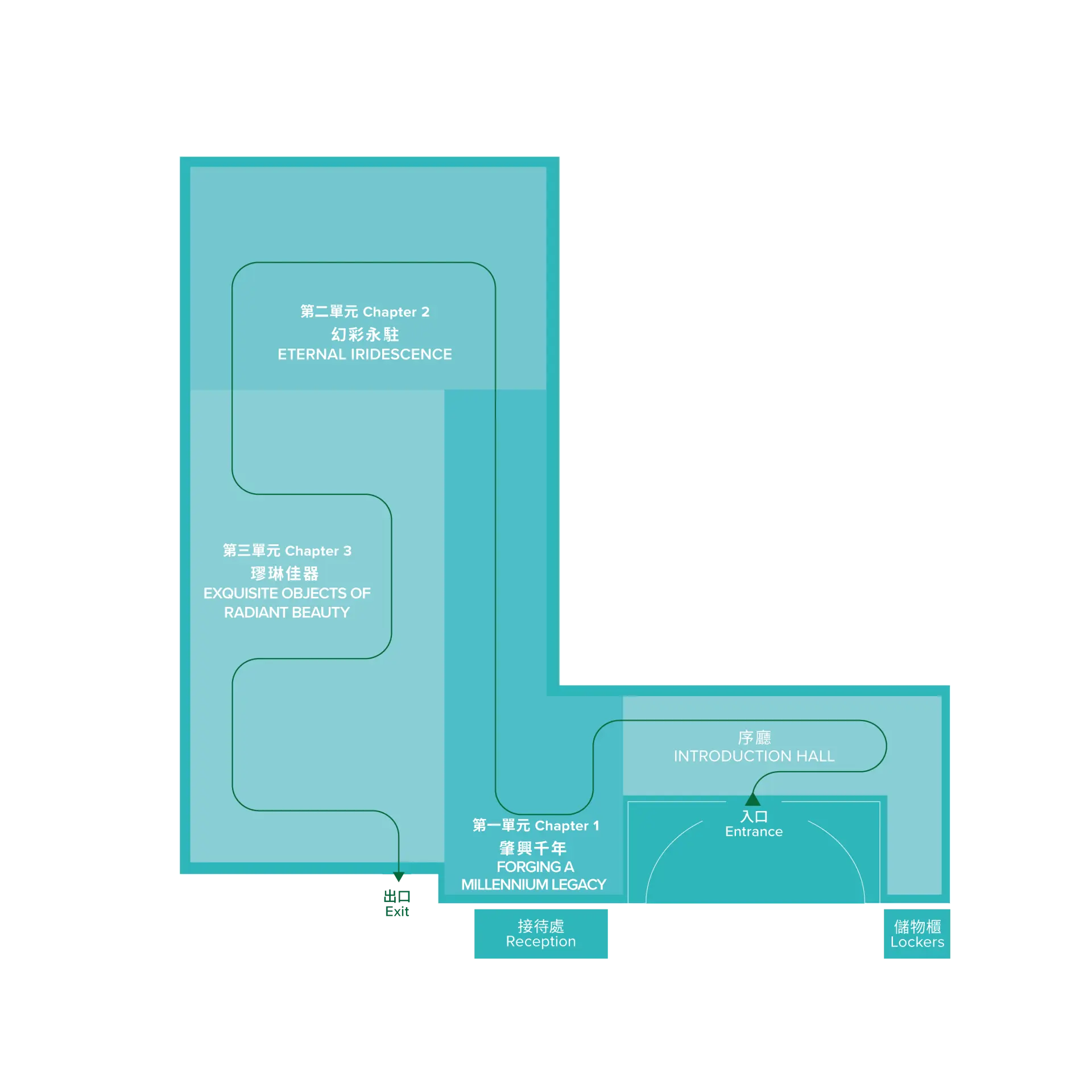
Chapter One — Forging a Millennium Legacy
This chapter traces the deep roots of Chinese glassmaking, revealing how materials, techniques, and aesthetics travelled and transformed across civilizations.
Chapter Two — Eternal Iridescence
Through techniques such as blowing, lost wax casting, inside painting, and carving, this chapter showcases the radiant color palette and distinctive Eastern aesthetics of liuli. The works highlight the fusion of technical mastery and artistic expression that defines the tradition.
Chapter Three — Exquisite Objects of Radiant Beauty
The final chapter presents outstanding contemporary glass artworks, illustrating how today’s artisans build upon ancient foundations while exploring new artistic languages. Chinese and international works appear together, highlighting the global dialogue shaping glass art today.
Guided Tours
Guests are warmly invited to join our daily public guided tours at 15:00 (Cantonese) and 16:00 (Mandarin). No advance booking is required. Each session lasts approximately 45 minutes and is limited to 20 guests on a first-come, first-served basis.
For English-language tours, please email museum@mgm.mo at least 14 days prior to your visit to secure a reservation.
In addition to public guided tours, we offer an audio guide that allows guests to explore the exhibits at their own pace. Simply scan the QR codes on the exhibit labels to listen to the stories in Cantonese, English, or Mandarin. We recommend pairing a mobile device with a headset for the best listening experience.
Additionally, complimentary exhibition brochures are available to help our guests explore the museum and highlight exhibits.
Exhibition Floorplan:
Exhibition Highlights
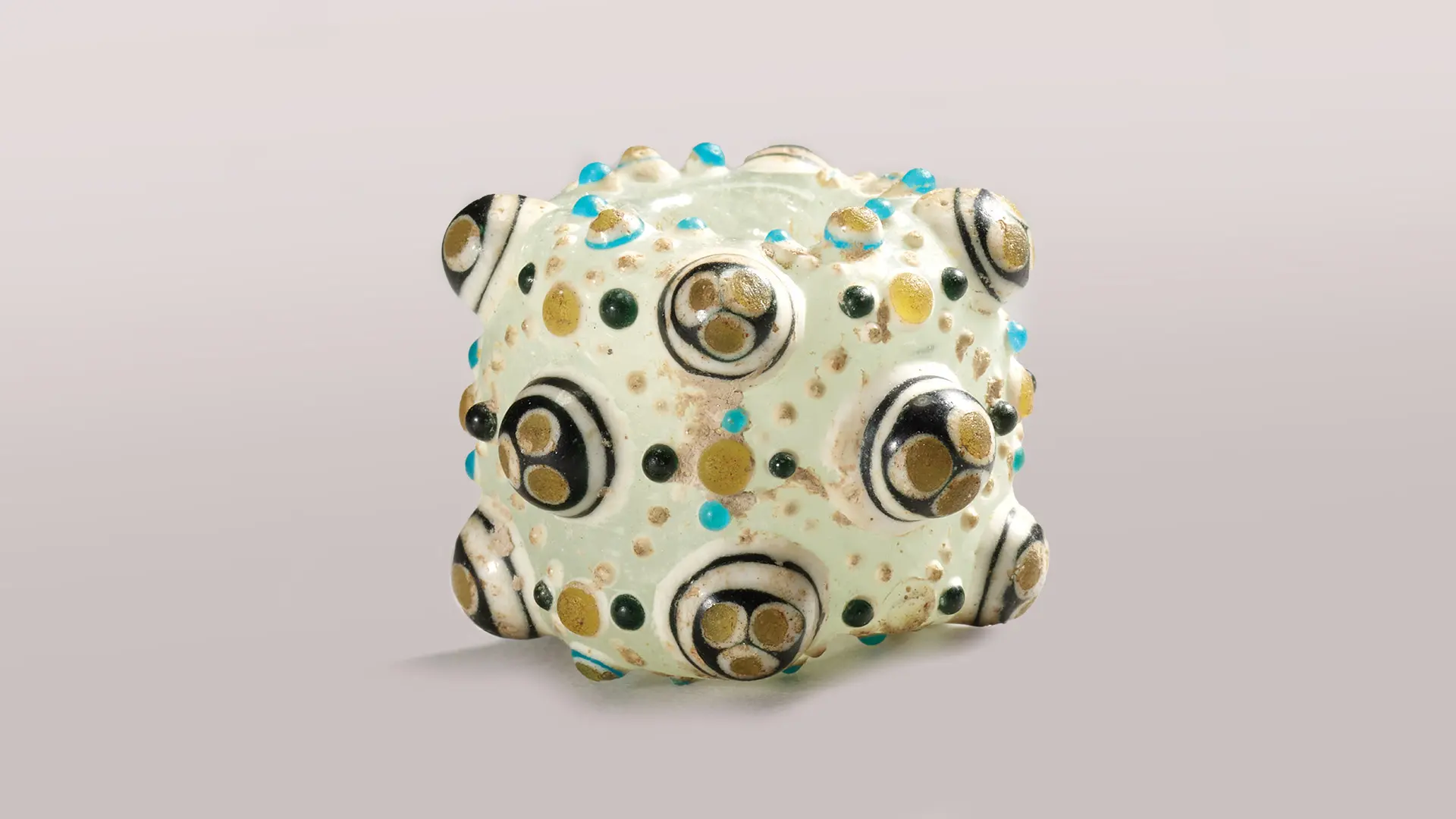
Dragonfly-Eye Liuli Bead
Warring States Period
Collection of the National Museum of China
This Warring States period "dragonfly-eye" liuli bead features a white base decorated with multicolored concentric circles, frequently worn as part of a necklace or waist ornament in ancient times. This type of bead is believed to have originally been an import from Central or West Asia, which, after being introduced to China through trade, gradually evolved to incorporate distinctive local features. Similar beads are widely found across China, Southeast Asia, West Asia, and the eastern Mediterranean, offering valuable insights into the development of early glassmaking and cultural exchanges across these regions.
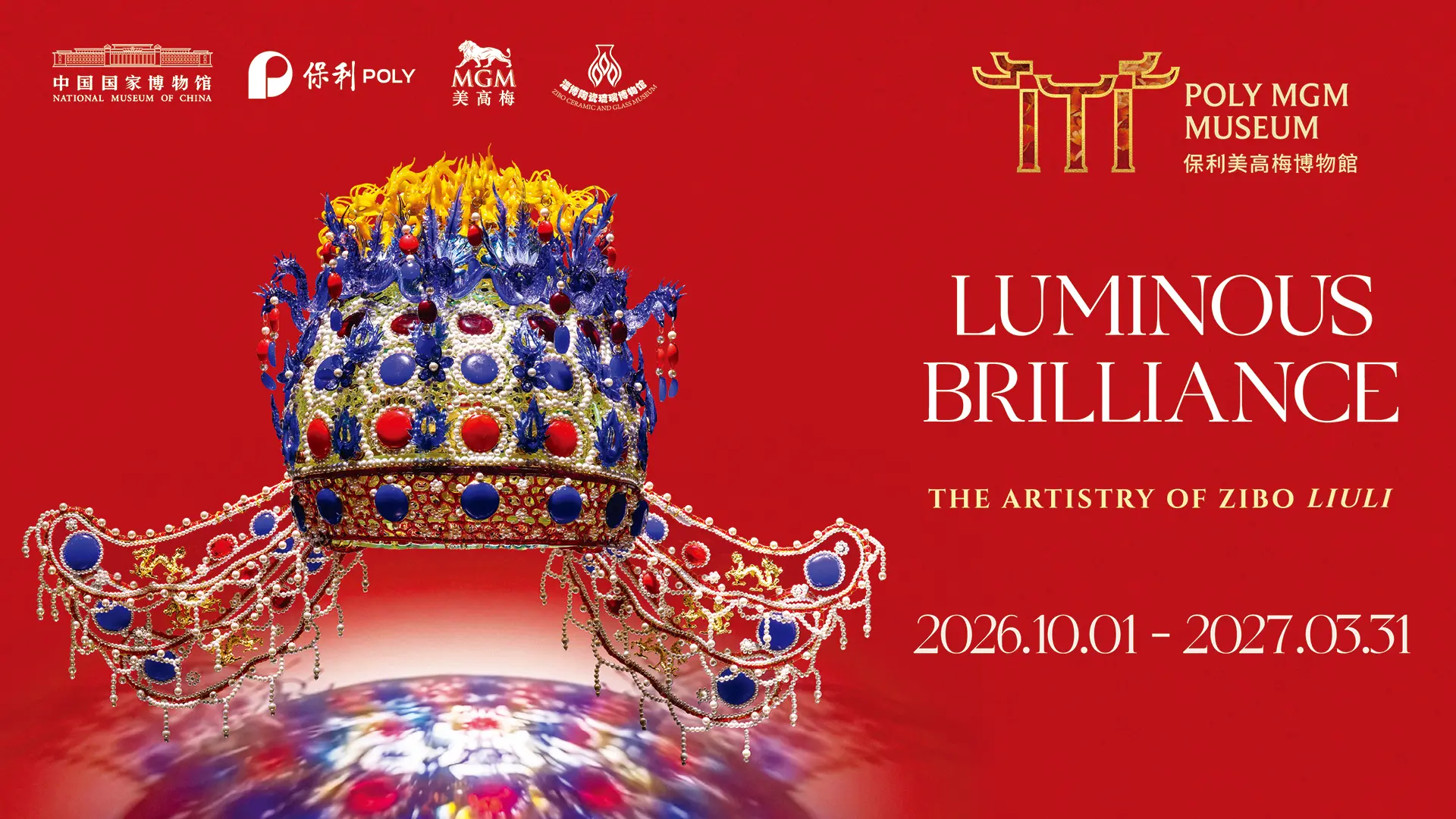
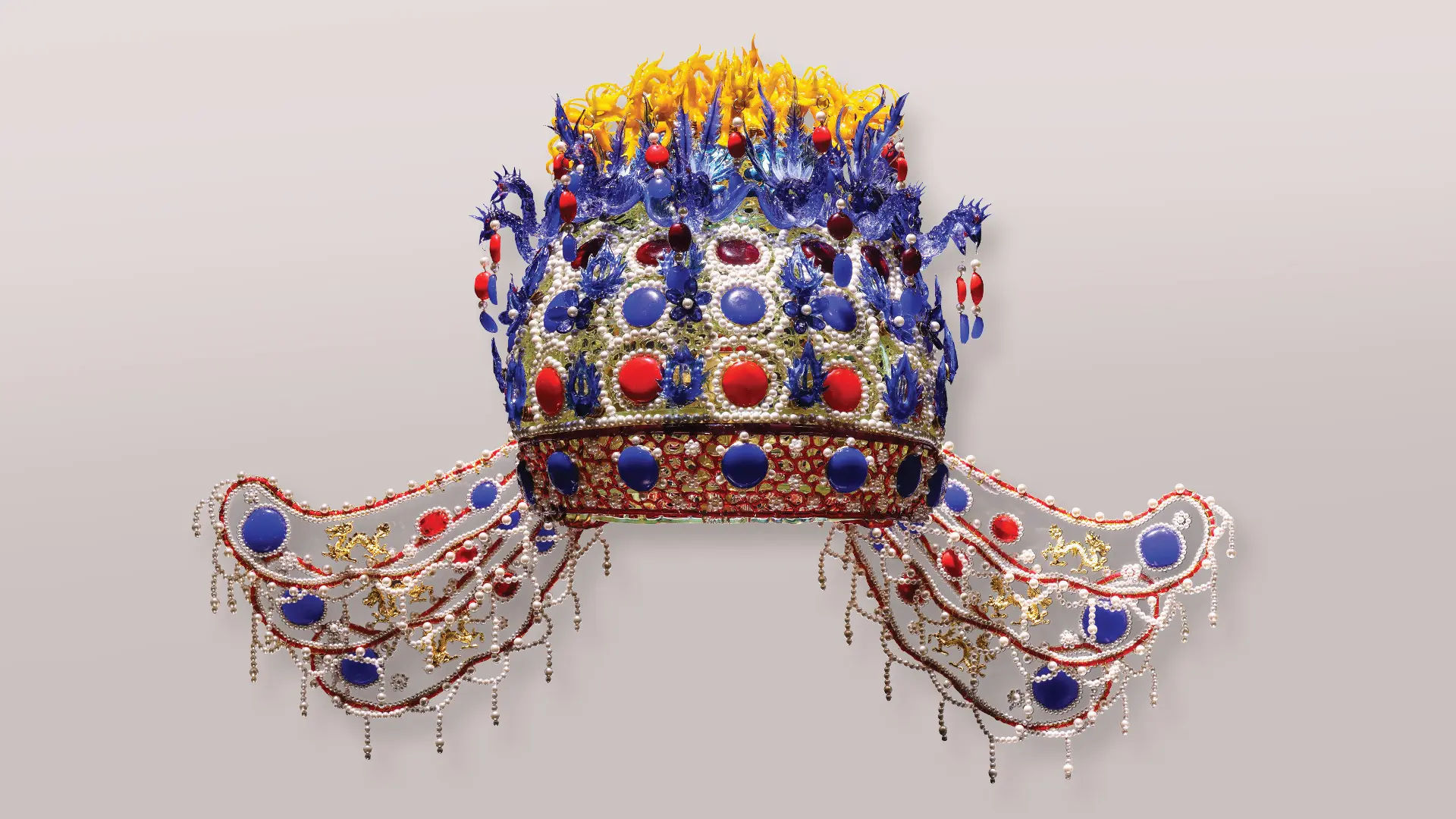
Liuli Phoenix Crown
Contemporary
Sun Qiye, Zou Yuxi, Chen Yuqiang
Ancient phoenix crowns relied on gold, silver, kingfisher feathers, and natural gemstones for their splendor. Pushing the boundaries of liuli craftsmanship, the artist replaces these precious materials entirely with lampworked liuli. Composed of 4,800 handcrafted liuli beads and nearly 5,000 lampworked components, the piece was brought to life through repeated high-temperature firings and delicate assembly. Within its intricate details, this crown not only demonstrates consummate craftsmanship, but also carries the deep cultural heritage of traditional Chinese ceremonial attire, a landmark achievement in contemporary lampworked liuli.
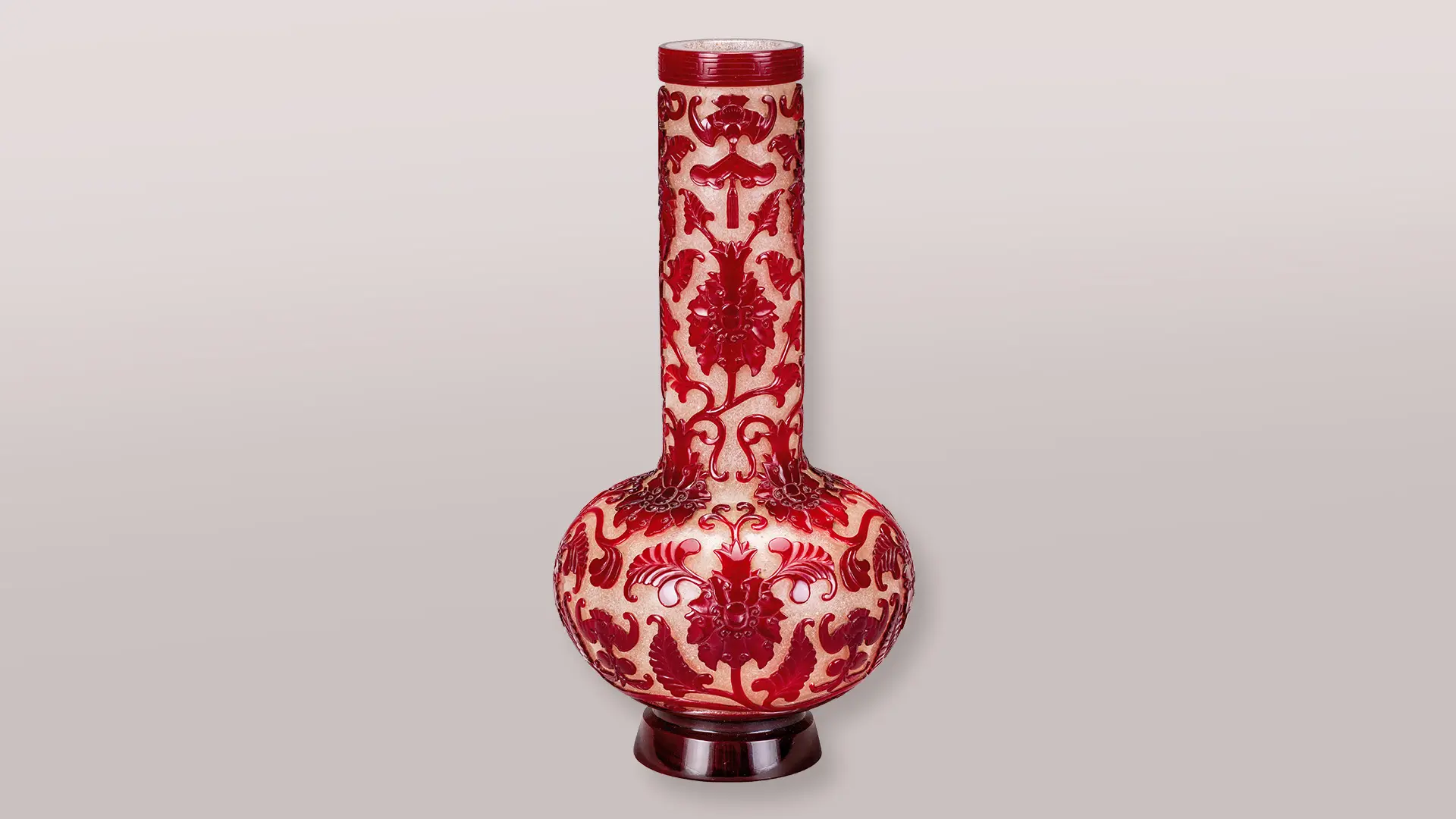
White-Ground Overlay Ruby-Red Glass Vase with Lotus Scrolls
Qing dynasty
Collection of the National Museum of China
This vase was created using the overlay glass carving technique, a defining craft of Qing imperial glassware. The opaque white glass body is overlaid with a layer of rich ruby-red glass, which is then carved to create decorative reliefs. The neck and body are densely ornamented with scrolling lotus vines, their stems flowing continuously across the surface in graceful lines. Interspersed among the lotus scrolls are motifs of bats and chimes, forming the rebus fu qing, or "blessings and joy," and expressing wishes for abundant happiness and lasting prosperity.
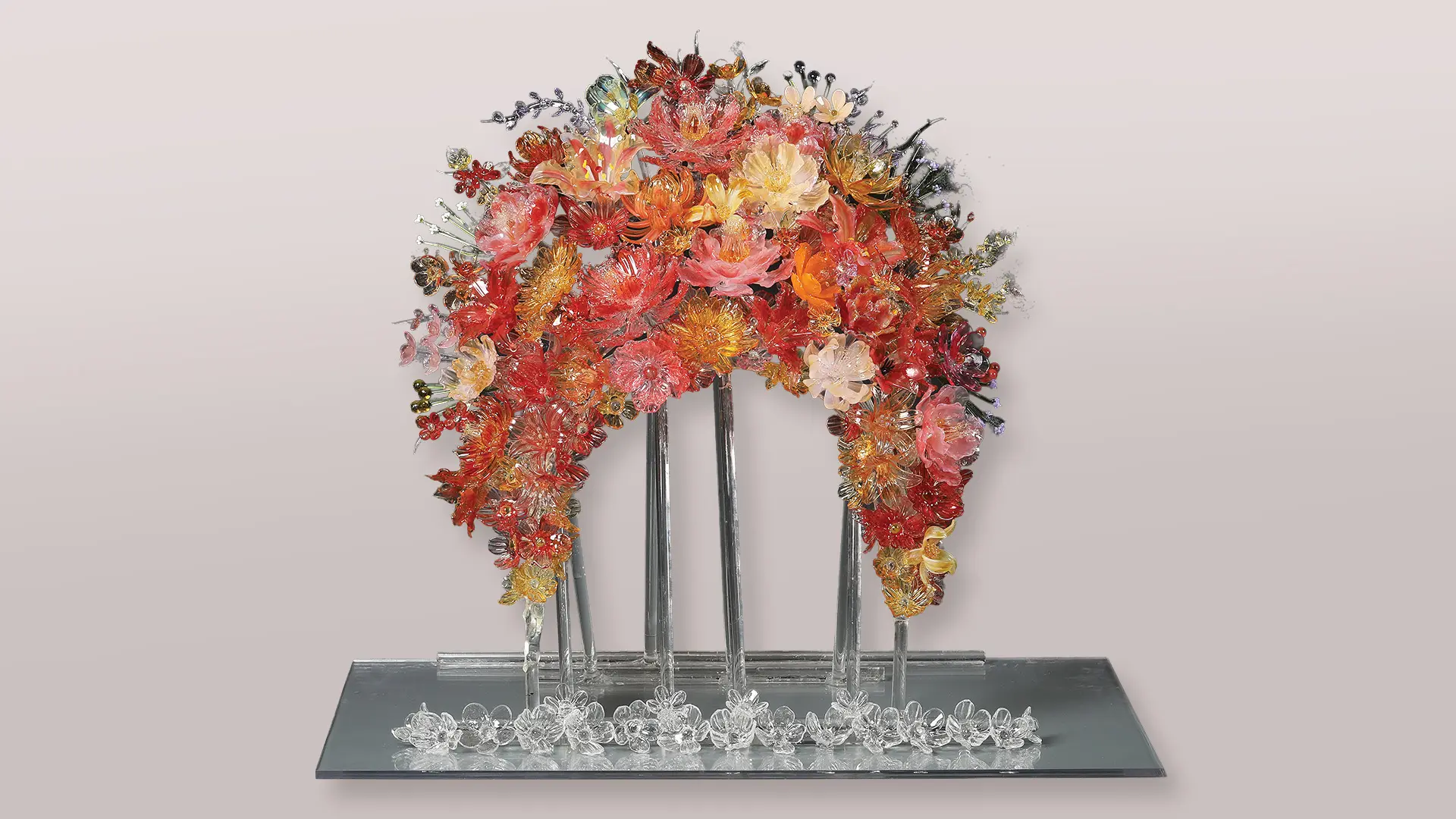
Flourishing Blossoms
Contemporary
Wang Jingyao
Created by an emerging artist, this piece takes inspiration from Quanzhou’s zanhua (flower-headdress) custom, a national intangible cultural heritage from Fujian Province. In this long-standing tradition, local women wear elaborate floral headpieces overflowing with vibrant blossoms, celebrating a lively and spirited folk culture. Masterfully employing Zibo lampworking techniques, the artist shapes molten glass under high heat into an array of delicate peonies, lilies, and chrysanthemums. This work transforms that vibrant, flourishing vitality into an everlasting spring, reflecting a deep aspiration for a beautiful life.
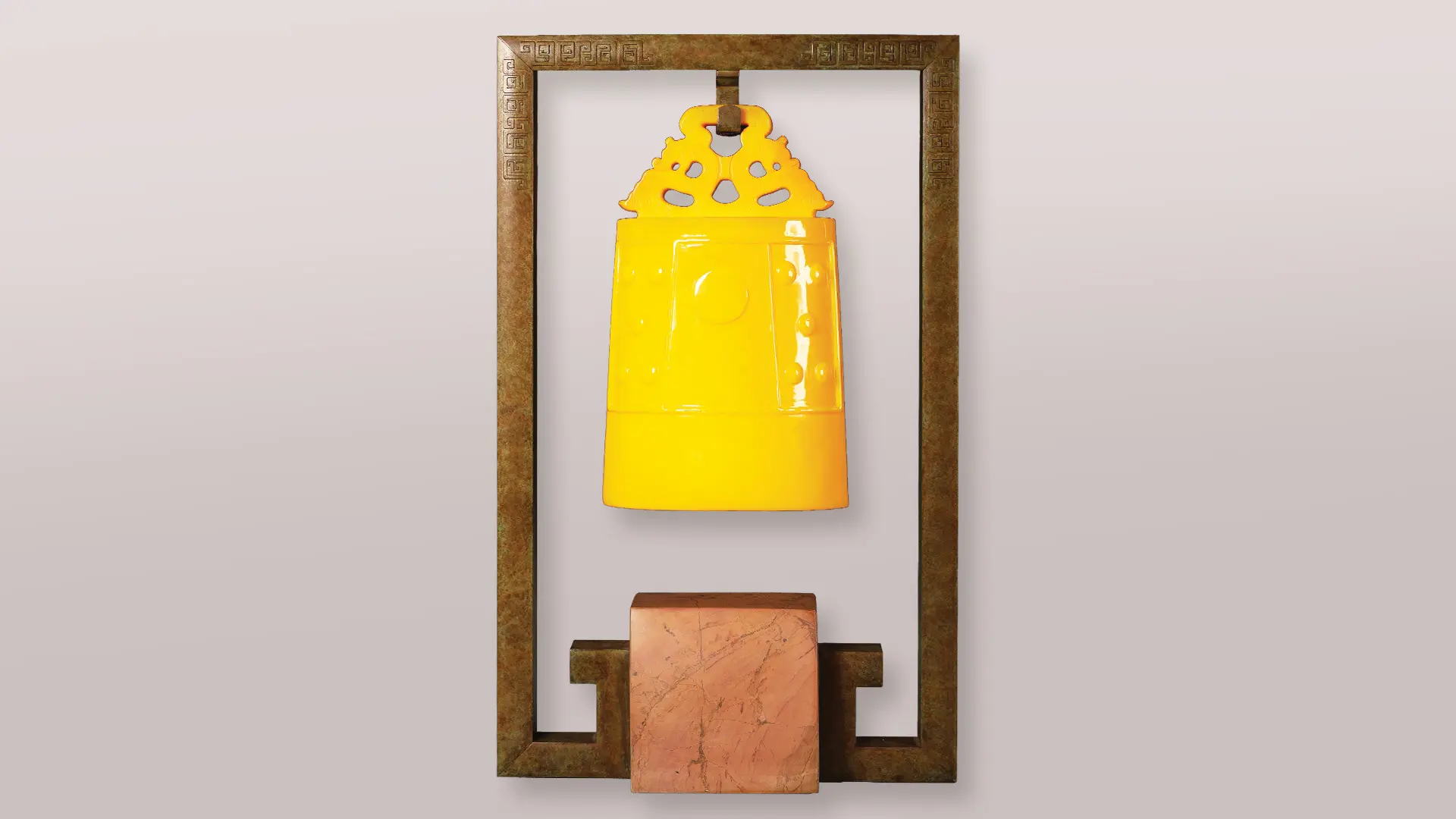
Chicken-Fat Yellow Chime Bells
Contemporary
Sun Yunyi
Inspired by the bianzhong, the ancient Chinese chime bell, this piece is crafted from a single seamless body of "chicken-fat yellow" liuli using a centuries-old technique once lost to history. Masterfully integrating Zibo liuli with the cultural legacy of Chinese ritual music, this work carries a rich imperial yellow hue that embodies the perennial history of Chinese civilization, bridging the past and present.
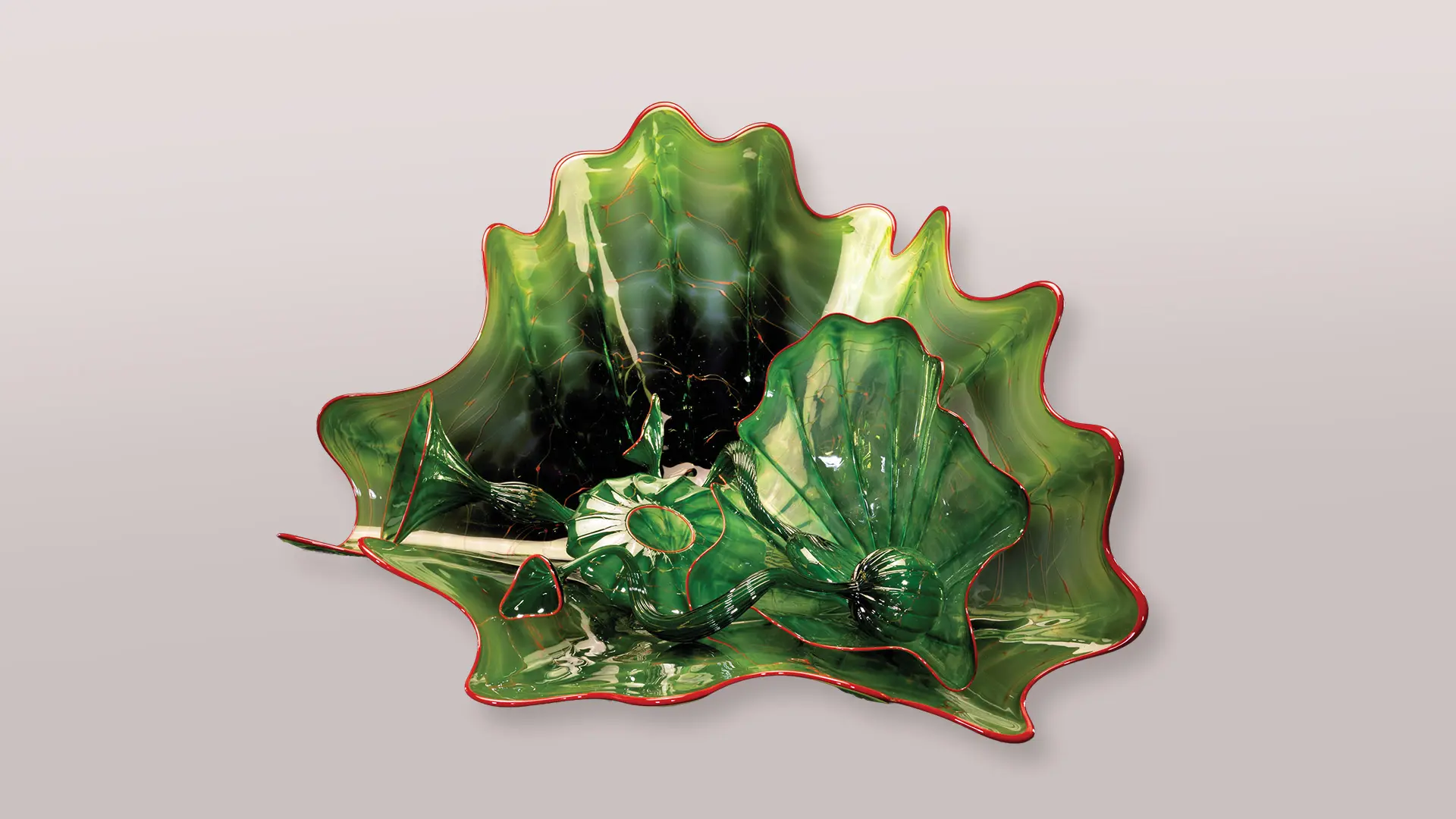
Greenpersi & Cherrywrap
2000
Dale Chihuly
Collection of POLY MGM MUSEUM
Dale Chihuly’s Persians series is a tribute to form, texture, and the interplay of light and color. Originally designed for pedestal display, its expressive structures gradually evolved into dynamic wall installations, suspended ceiling compositions, and dramatic chandeliers or towering sculptural forms. For Chihuly, the series evokes a sense of ancient history, conjuring cultural imagery of Venice, the Near East, and the Far East.